


Introduction
The return of the Tata Sierra goes beyond a simple act of nostalgia; it signifies Tata Motors’ intent to merge heritage with modern SUV expectations. At the base level, this variant represents an entry point for buyers who want the Sierra name, design, and Tata Sierra Base Variant philosophy without stretching their budget too far. For many Indian customers, this will be the variant that defines how accessible and relevant the new Sierra really is.
The iconic Tata Sierra name
- Brings back one of India’s most iconic SUV nameplates from the 1990s.
- Taps into strong emotional and nostalgic value among long-time Tata followers.
- Reimagined as a modern SUV, it will feature contemporary design, technology, and safety.
- This represents Tata’s confidence in bringing back the legacy brands successfully.
Who the base variant is actually meant for
- Price-conscious buyers seeking the Sierra experience at the lowest entry point.
- Families valuing space, safety, and comfort over premium features.
- First-time SUV buyers upgrading from hatchbacks or compact sedans.
- Those buyers who would later customize or add accessories themselves instead of paying for top trims.
Positioning within the future SUV lineup of Tata
- Serves as the gateway model below higher Sierra trims
- Strategically placed between the compact SUVs and premium mid-size SUVs
- This supports Tata’s long-term vision of offering both electric and internal combustion options in each segment.
- Designed to attract volumes in their thousands, strengthening Sierra’s presence in the market.
Expected Price & Market Positioning
Tata Sierra’s base version is set to make its presence deeply felt in the Indian SUV market, combining an enticing package of Tata’s rugged SUV DNA and necessary features in an affordable price tag. This time, in the highly competitive mid-size SUV market, the price factor has a crucial role to play in the success of the Sierra. Tata will hopefully price its base version to woo the price-sensitive buyers in the market. This base version of the Sierra will be designed to challenge both mass-selling SUVs and the base-level variants of mid-size contenders, redefining expectations among buyers in this market.


- Expected to commence from the ₹12 – 15 lakh (ex-showroom) range to ensure competitiveness in the midsize SUV market.
- It is positioned lower compared to the higher variants of the Sierra range with the intention of attracting as many customers as possible.
- Pricing was aimed at attracting value-conscious consumers wanting the features of an SUV at non-luxury prices.
- Capable of competing with rivals in the same engine and size category to rival market leaders.
Tata may offer the base variant with some standard essential facilities:
- Providing core features at an economical price, thereby making it less necessary for consumers to move towards more expensive variants.
- This helps Tata go very aggressively on prices compared to rival SUVs like Hyundai Creta, Kia Seltos, and Mahindra XUV300, as there are fewer trim
- Possible cost competitiveness because of localization and a shared platform with other models in the Tata range.
- Leveraging brand trustferences/qualifications: leveraging brand trust and safety quality to justify a high base price.
Comparison with mid and top models
- The base variant may contain the whole list of ‘must-have’ features, making the base variant sufficient for many people without the need to shell out extra money for additional features.
- The mids and upper trim levels will feature Creature Comforts and advanced technology, and then there’s just Base, which also holds up well as a viable option.
- Provides the core Sierra experience—roominess, safety, and driving character—with the higher-end models adding to the SUV rather than shaping the vehicle.
- Where cost-conscious consumers with priorities aligned with necessities rather than luxuries are concerned, the base trim may just represent the sweet spot for the lineup.
Powertrain Options (Expected)
As far as powertrain configurations in the Tata Sierra base variant are concerned, consumers can expect Tata Motors to strike a balance between performance, fuel efficiency, and economic viability. In the case of the base variant, Tata Motors can concentrate on providing consumers with a powerful and reliable ICE solution that meets general driving requirements while holding other variants in readiness that feature an electric powertrain solution in the Sierra series. Based on this, the following are some expected features of the Tata Sierra base variant in terms of ICE/EV powertrain configuration, expected horsepower, transmission type, and estimated mileage.
ICE vs EV expectations for the base model
- The starting model is expected to focus on ICE first to keep prices low and cater to the Indian market.
- Depending on market needs, EV models, if launched, could also be offered as higher variants or as a derivative model to warrant a higher price tag.
- The base version could initially roll out with the ICE engine, followed by the launch of the EV version when the supporting infrastructure is developed.
- ICE focus allows improved servicing and existing support in India, which is lacking in EVs at present.
Engine or motor output expectations
- The base engine likely to power this car could be a 1.5L Turbocharged or a more efficient diesel variant.
- The power output might range around 110-130 PS for petrol, while for diesel, it might range around 110-125 PS. There would be equal focus on power and
- Torque outputs can be expected to be around 140-250Nm, which should offer plenty of bottom-end punch for urban and highway driving.
- Expectations would be for the new range to be in the 120-150 PS bracket should a further EV motor emerge.
Transmission choices (Manual/Automatic possibilities)
- A manual transmission with a 6-speed configuration will probably come combined with the base model.
- There might also be an available upgrade in the form of an automatic mode, perhaps an AMT or torque converter.
- Dual-clutch automatic (DCT) transmission systems are less favored at the base model level due to economic reasons.
- If there is an EV variant, it would come with a single-speed automatic transmission by default.
Expectations regarding mileage range
- For ICE, the fuel efficiency might be competitive, approximately 15–18 km/l in practical urban driving conditions.
- Road miles may extend even further, perhaps to 18-20 km/l.
- The estimated range in a future variant of the EV could be in the range of 250 to 350 km on a full charge, which will be in line with market standards.
- This ensures that the basic powertrain designs optimized by Tata are well-balanced regarding performance and costs.
Exterior Design: What You’ll Get in the Base Variant
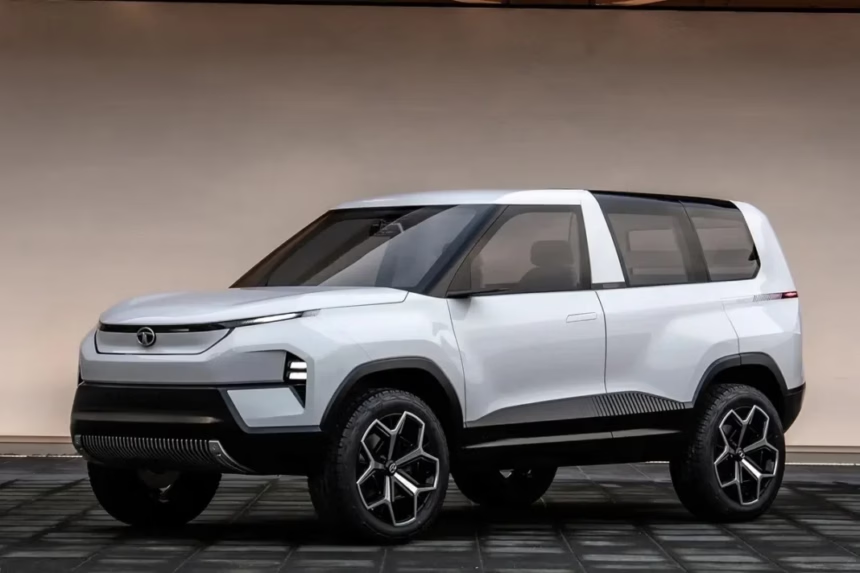
The Tata Sierra Base variant is set to continue the bold and unique design language that has always made the Tata Sierra iconic in the Indian automotive market, although it will reduce some of its facets to maintain the cost-effectiveness of the base variant. The design team of Tata cars will always make sure to maintain the unique design elements that make the Tata Sierra unique in the market, such as its retro-modern shape, distinct roofline design, and rugged appearance, although the base variant will reduce some of the premium elements found in the higher variants.
Design Elements of Sierra that Probably Carried Over into Catalina
- A boxy but very contemporary design that honors the original Sierra design.
- Striking shoulder line and musculature to convey the SUV character.
- Signature black cladding on wheel arches and lower body for a more rugged look.
- Roof styling hints, likely to include some design cues that evoke the more relaxed nature of the classic Sierra range.
Headlamp, grille, and lighting expectations
- The base trim could come with projector headlights or halogens instead of LEDs.
- A simplified but unique grille design that links it with its Sierra relatives.
- The DRLs are very likely going to be present in this model. It may come with halogen or basic LEDs. Advanced LEDs would be a remote possibility.
- The rear lights may adopt a functional design: fashionable yet budget-friendly.
Wheel size, Steel vs Alloys
- Base variants tend to opt for cost-cutting, and therefore, a wheel size combination of 16 inches is expected.
- The steel wheels with covers may come standard, while alloys may only come on mid and high trim levels.
- Tyres with more emphasis on comfort rather than sports car handling.
- Later modifications could include options to purchase upgrades to add different alloys to the vehicle.
Colors and paint choices, base trim identity
- A choice of core paint colors will be available to base Sierras, and solid and two-tone schemes could be paired.
- Traditional SUV colors such as white, silver, gray, and blue can be included to anchor this palette.
- Some dual-tone color schemes can only be found on the higher-end variants.
- “The visual identity of the base variant is expected to be oriented towards functionality and understated design, but at the same time be sufficiently distinctive on the road,” adds Trutnev.
Interior & Cabin Experience
Under the Tata Sierra base model, the emphasis will revolve around a roomy, functional, and comfortable interior design that adheres to its core SUV identity. Tata is expected to achieve a balance between its functional and emotional design elements to ensure that its starting model exudes a contemporary and functional design. Its interior design will incorporate straightforward and functional elements to offer the best possible use of space for its customers. Even though the interior design may not end up incorporating the best materials and latest features, the interior design for the starting model of the Tata Sierra must still deliver a good experience to its customers based on its value-for-money delivery program.


- Simple, clean design with convenient access to control functions.
- Textured plastics and hard surfaces where frequent contact occurs.
- A decent-sized central Infotainment screen ( probably smaller compared to higher variants), with the essential connectivity functions.
- A functional instrument cluster—maybe semi-digital or analog with a small information display.
Seat material and color theme
- Upholstered with fabric as standard, due to comfort and ease of maintenance.
- Coloring schemes that emphasize a neutral scheme like black, gray, and two-tones to keep the interior of the vehicle clean and functional.
- Seat cushioning that provides comfort during typical urban and highway driving.
- Manual seat adjustment for the drivers and the passengers to ensure that the cost is under control.
Space, comfort, and practicality are the defining qualities.
- Ample head and leg room for the front and rear occupants. It can easily seat adults.
- Considerate location of grab handles, cup holders, and door bins for convenience.
- Visibility from all seating is excellent due to upright windows and seating position.
- Rear AC vents and adjustable airflow features might be added to even the lowest model to cater to passengers.
Boot-space and storage requirements
- Ample boot storage that can easily accommodate luggage, groceries, and weekend bags.
- Rear seats expected to be foldable. Possibly increased cargo capacity.
- Practical storage solutions such as cubbies located underneath the seats, glovebox storage, and overhead consoles
- Easy to open boot mechanism and flat loading floor.
Features Offered: Essentials First Approach
The Tata Sierra base variant, the list of features is expected to revolve around ‘usefulness’ rather than ‘luxury.’ Tata is expected to include the necessary features that a modern SUV buyer wants in the base variant of the Tata Sierra, such as ease of infotainment control, clarity of information displayed, and basic connectivity options, while keeping the advanced features in the higher variants. This allows Tata to offer competitive prices on the SUV without compromising on the basic aspects of a strong SUV. The Tata Sierra base variant is expected to miss the following features.


- A mid-range touchscreen display with a focus on basics, rather than screen real estate.
- Android Auto/Apple CarPlay smartphone integration.
- Bluetooth and USB connectivity for music and calls.
- Straightforward and elegant user interfaces without any fancy animation or complex widgets.
Instrument cluster (Digital vs Analog)
- Presumed semi-digital or analog grouping with a small multi-info display.
- Highly understandable speedometer and tachometer designs.
- Practical information on trips such as fuel efficiency, range, and distances traveled.
- The complete digital cluster might be left for the upper trims.
Steering wheel, AC, and networking fundamentals
- Controls mounted on the steering wheel related to the functions of audio and phone that work to provide convenience.
- Air conditioning as standard, designed specifically for cooling performance. Available in manual air conditioning.
- Several USB charging ports (front and potentially also at the rear) for all passengers.
- Typical power windows and electric ORVMs (outside rear view mirrors) for functionality.
What high-end features will probably be absent
- Panoramic sunroof—is usually found on mid to upper models.
- Quality speaker system—sound upgrade can be limited on the base model.
- Wireless charging pad—usually found only in the pricier variants.
- Advanced Driver-Assistance Systems (ADAS), Lane-Assistance Systems, Adaptive Cruise Control Systems, etc.
- Ambient lighting and quality upholstery. This might not be possible in the basic model.
Safety: Tata’s Core Strength
The safety aspect is surely going to provide one of the largest benefits for the base variant of the Tata Sierra, living up to Tata Motors’ age-old tradition of creating some of the safest cars for the Indian market. Even in its entry-level variant, the Tata Sierra is set to provide its customers with an excellent combination of active and passive safety elements, ensuring that the customers do not have to make any sacrifices when it comes to safety just because they are going for the base variant.
Standard Safety Features Expected
- “It is essential to put a high value on basic safety in every model available on the market. Any new model should
- Anti-lock braking system (ABS) that incorporates electronic brake distribution (EBD) to provide
- Rear parking sensors for low-speed assistance
- Seat belt notifications for front and rear passengers
- ISOFIX child seat mounting for improved child safety
Airbags, ABS, ESC possibilities
- Expected dual airbags, in line with Tata’s recent approach to car safety
- Added ABS and EBD functions to avoid wheel lock-up during emergency braking events.
- Electronic Stability Control (ESC) Probable to be offered, at least as a standard or optional feature, depending on the model choice
- Traction control and hill hold assist could also be added to help the car on an inclined road or on a slippery road.
Structural Strength and Platform Talk
- Constructed with high-strength steel to enhance crash energy absorption capabilities.
- Crash structure for maintaining the integrity of the cabin compartment
- The platform is expected to conform to the latest international specifications regarding crash safety standards
- Prioritize passive safety by focusing on sturdy chassis designs and crumple zones
“Bharat NCAP safety focus”
- Tata aims at focusing on high Bharat NCAP safety ratings for the Sierra models’ release
- “Base model likely engineered to meet the same crash test rating as higher trim levels.”
- The presence of strong safety credentials may very well emerge as a decisive differentiator within the market
- Enhances Tata’s brand identity as a safety-oriented brand that values safety over expenditure
Ride Comfort, Handling & Daily Usability
The Tata Sierra base variant is expected to be tuned in a way that takes into consideration the typical driving conditions found in the Indian market, keeping in mind the aspects of comfort, sturdiness, and usability rather than sportiness. Tata’s SUVs are recognized for their balanced handling, and it appears that the Tata Sierra will also abide by this trend by being confident on inferior roads and stable at higher speeds. For day-long driving, family usage, or long highway trips, the Tata Sierra base variant is expected to handle in a predictable, comfortable, and convenient manner.
Suspension Setup Expectations
- Handling is probably optimised for comfort-oriented driving, with emphasis on absorbing rough roads.
- MacPherson strut suspension system in the front and strong suspension in the back for stability
- Designed for handling potholes, speed breakers, and undulating rural roads effectively
- Slightly soft suspension setup for enhanced comfort over firm suspension setups for passengers
Urban driving comfort
- Light steering response when moving slowly for ease of maneuverability
- Good forward visibility from upright seating position
- Smooth ride on uneven city roads and road humps
- Smoothening clutch and gearbox parameters (in the case of ICE engines): Reduces driver fatigue while driving in traffic
Highway stability
- Stable and well-planted at cruise speeds
- Little body roll during cornering and lane changes
- Confident braking performance for highway driving
- Suspension tuned for comfort without float at high speeds
Ease of Ownership for Daily Use
- Handling that makes it easy to drive, regardless of experience level
- Tata has a large network of services to ensure stress-free car ownership
- Real-world ground clearance to tackle the roads in India.
- “Well-balanced running costs, rather than thrills, drove the development of transportation devices”.
Base Variant vs Higher Variants
The Tata Sierra base variant is designed to deliver the core Sierra experience at the lowest possible entry price, while higher trims focus on adding comfort, technology, and premium appeal. The difference between variants will not be about fundamentals like space, safety, or road presence, but about how much luxury and tech a buyer wants to layer on top. Understanding this gap is crucial because many buyers might find the base variant to be perfectly adequate, while some may benefit from stretching their budget for a higher trim.
Key features and pricing differences
- Base model is expected to be far cheaper, and would therefore become the cheapest Sierra available
- Higher trims likely add larger infotainment screens, digital clusters, and premium audio.
- Alloy wheels, LED lighting, and a dual-tone paint scheme are some of the exterior updates on higher variants.
- Comfort additions include automatic climate control, sunroof, and powered seats reserved for upper trims.
- Advanced safety and driver-assist features are more likely to appear on mid and top variants
Who should stretch to the mid variant?
- Buyers who need more comfort and convenience features for daily use.
- Those who prize more sophisticated infotainment, interior finish, and aesthetic appeal
- Urban users who would prefer an automatic transmission option, if not available on the base trim.
- Buyers who plan long-term ownership and are willing to pay for extra tech
For whom the base variant is perfect
- Those budget-conscious buyers who want the Sierra name, size, and safety at the lowest cost
- A family-oriented customer often prioritizes the need for space, comfort of the ride, and protection rather than extramarital affairs in luxury features.
- Those buyers who want to upgrade from hatchbacks or compact cars
- For buyers who don’t really want to pay for higher trims but would rather add accessories later.
Rivals & Alternatives
The Tata Sierra Base Variant faces intense competition against some established models that have won many consumers over in their quest for space, functionality, and power. Nonetheless, if the unique combination of the rugged looks, safety reputation of Tata, and the value-for-money Base trim of the Sierra can manage to establish itself in the market, that would be a distinct advantage. It would be essential for consumers to grasp how the Sierra Base Variant measures against other models in matters of cost, size, and functionality.
Probable Rivals in the segment
- Compact and mid-size cars such as the Hyundai Creta, Kia Seltos are known for their packed features and “city-friendly” design
- Mahindra XUV300: Offering an “engaging drive experience and a strong set
- Maruti Suzuki Grand Vitara / Toyota Urban Cruiser Hyryder, Emphasis on Fuel Efficiency and Brand Trust
- Other SUVs that compete with the MG Hector, which provide value for money, and cost around ₹12-18 lakh:
Price vs size vs feature comparison
- Sierra’s competitive pricing at the basic level may skim weaker rivals, who might not match a similar SUV height
- In terms of interior dimensions, the Sierra’s boxy design could potentially provide greater head and cargo room compared to rivals
- But feature listings may be less comprehensive on the lower trim model, and competitors may also charge a premium for optional groups.
- Certain models may have better scores for more advanced technology or convenience features that are more “marketed” or well-advertised, but sometimes for a higher cost.
Why the Sierra base variant might have been unique to the cars
- Emphasis on traditional SUV values: strong stance, spacious interior, usability
- Tata’s reputation for safety and quality, even with base-model variants
- Value proposition for buyers who believe that the basics done right aren’t worth paying for if one is simply paying for bells and whistles that one doesn’t need or cannot utilize.
- The ability to offer good real-world drivability and comfort, appealing to family car buyers and long-distance users
Ownership Costs & Maintenance
For an average Indian car buyer, buying an SUV and reliability at an affordable cost are major considerations. This is because the Tata Sierra’s basic trim is anticipated to provide a comforting combination of highly serviceable maintenance costs, reliable mechanicals, and a highly serviceable servicing cycle, thereby turning out to be a major temptress not only when you are buying the SUV but also in the future. Tata Motors has consistently tried to improve its after-sales service infrastructure in India, and this should have a direct effect on the Tata Sierra.
Service intervals and reliability expectations
- At standard service intervals, perhaps every 10,000 to 15,000 km or 12 months, depending on the requirements.
- Routine checks to maintain predictable and manageable operating expenses.
- Engine and drivetrain are based on Tata’s proven platforms and have better reliability.
- A schedule for maintenance works which prevents surprise expenditures.
Spare parts and service network advantage. While the company’s current
- This helps ensure that there is an easy network to the authorized workshops even in small towns.
- Availability of good parts is also expected to improve.
- Competitive pricing of regular components compared with some high-end competition, which reduces costs.
- Many independent mechanics understand Tata cars and may offer flexibility when required.
Long-Term Ownership Value
- High resale value potential because of Tata’s rising reputation for being rugged and sturdy, and also safe.
- “The simplicity of the Base variant could mean lower repair and maintenance costs in the long run, with fewer complex systems that need to be maintained.”
- Fuel economy and well-balanced performance result in lower costs of operation in the long run.
- The chassis is well-engineered and features sturdy construction, which helps to keep the cars in good condition for a long time.
Who Should Buy the Tata Sierra Base Variant?
The Tata Sierra base model is created for consumers who are interested in the basic requirements of an SUV – space, safety, dependability, and functionality – without spending a fortune on advanced technology or luxurious elements. It is apt for consumers who like the Tata Sierra experience in a more accessible and more practical guise. Tata’s Tata Sierra base model is a great choice for consumers with diverse lifestyles.
Buyer Profiel Ideal
- Those in search of budget-friendly SUVs that can provide the greatest value while still retaining safety and functionality.
- People who buy SUVs for the first time and are upgrading from hatchbacks or compact sedans
- Families looking for a venue that can provide comfort not only for daily trips, but also for long drives.
- Consumers with a preference for simplicity rather than advanced technology are willing to assume a functional approach.
Use Cases (Family, City, Highway, First Time Buyers)
Family use:
- Spacious interior, sturdy build, ideal for school dropping off or pickups, outings with families, and grocery shopping.
- While driving on the city roads: The Sierra base model is quite comfortable to handle and thus very suitable for city driving.
Highway driving:
- On the highways, the good stability and ride quality instill confidence to continue driving for long distances or between cities.
- First-time buyers: It offers favorable prices, which make it an excellent option as a first SUV purchase.
When the base variant is the most appropriate choice
- For situations that involve budget, or where functional capability is far more significant than high-end features.
- If the customer is more concerned with the safety, size, and comfort.
- For those who plan on accessorizing down the line, as opposed to upfront accessorizing through high-end options.
- As it is meant for normal family chores, urban running around, and some journeys that do not require highly advanced tech.
Booking Details, Launch Timeline & Availability
Even as interest is surging regarding the Tata Sierra base model, prospective purchasers are eager to know more about when this model might arrive at Tata dealerships, along with more details pertaining to when Tata might begin taking bookings for this model. Tata Motors intends to implement a carefully measured strategy regarding when they might begin taking customer bookings for their new model, a crucial factor for prospective Tata Sierra model purchasers. Below are some details regarding what might occur.
Expected launch window
- Official launch is expected within the next 3-6 months as per the market indications available currently and Tata’s product cycle.
- Activities associated with pre-launch and teaser campaigns usually take place 4-8 weeks before launching, allowing a schedule for purchasers to prepare.
- Deliveries are expected to commence a few weeks after the official opening, depending on the response.
‘Booking amount expectations’ refers.
- Booking amount likely to be nominal and refundable. For the purpose of securing initial interest and testing the waters, the proposed system will require a nominal refundable payment
- The estimated cost for booking could be in the range of ₹10,000 to ₹25,000, which is similar to other new product launches.
- Early bird schemes or preferred delivery times may also be offered to those who are quick to book.
Strategy of variants deployment by Tata
- Tata might begin with the basic and medium variants, to reach their target groups in the initial stages itself.
- Variants with more features may follow soon after, giving consumers options based on their preferences.
- Variants for EV might, if they are intended, have a later entry in the cycle. They would synchronize with infrastructure readiness and production.
- Tata’s staggered launch plan may include special editions or feature packs down the line.
Final Verdict: Should You Book the Base Variant?
The Tata Sierra base variant represents a pretty solid purchase for those buyers looking to have the essence of a modern SUV sans the added premiums required for upmarket luxuries. Ideal as an entry point into the Sierra family, it represents the perfect blend of practical design with strong safety DNA and everyday usability. Mind you, the base model won’t boast all the bells and whistles of its higher‑trim siblings, but this is what most SUV buyers really need: space, reliability, comfort, and Tata’s trusted build quality.
Strengths of Sierra base trim
- Tries to sell Sierra core styling with some SUV appeal for an accessible price.
- Robust safety features combined with a strong structural build inspire confidence.
- Practical interior with good space, comfort for families, and daily driving.
- With Tata, the wide service network and ownership support go a long way in making maintenance easier.
- Well-balanced ride quality and ease of use, be it city or highway conditions.
Anticipated compromise
- Fewer premium features than higher trims, lacking items such as a sunroof, a large touchscreen, and advanced driver assists.
- Basic info-tainment and instrument clusters, which are rather low on tech flair, focus on the essentials.
- Steel wheels and simpler upholstery, functional rather than stylish.
- The less advanced comfort or some tech features for some buyers may be missed on the mid and top variants.
Overall value-for-money judgment:
- The Tata Sierra base variant offers excellent value if the need is for a well-rounded SUV that checks all the major boxes of safety, space, comfort, and reliability, without the added extra cost of luxury features and add-ons.
- It’s ideal for families, first-time SUV buyers, and anyone who values practicality over premium frills.
- While higher variants will attract those seeking the latest tech and creature comforts, the base trim stands strong as the smart, sensible starting point in the Sierra lineup.
- In a segment crowded with feature-heavy rivals, the Sierra base variant’s focus on fundamentals could very well be its biggest advantage.
FAQs: Tata Sierra Base Variant
Q1. How much will the base variant of the Tata Sierra cost?
Its base variant is expected to be pegged at the lower side of the pricing spectrum among Sierras, thus competing favorably with other mid-size SUVs in the Indian market.
Q2. Will the base variant of the Tata Sierra come out as an electric vehicle?
Tata is working on both ICE and electric variants of the Sierra series, the entry-level version will probably kick-start with ICE-based models in order to keep the prices budget-friendly.
Q3. What are the features that the base model will lack?
The premium features, like the sunroof, advanced driver assistance system (ADAS), infotainment touchscreen, and alloy wheels, may be limited to the mid and top variants.
Q4. To what extent will the Tata Sierra basic model be safe?
The base variant will provide good basic safety features, such as the presence of multi airbags, ABS with EBD, ESC, and the structural integrity that Tata is known for.
Q5. Is the Tata Sierra base model suitable for a family?
Yes, ample space, comfort, and safety make this car ideal for the whole family to travel in. It is also perfect for daily commutes and long drives.
Q6. From when are bookings expected for the Tata Sierra base variant?
The bookings will open shortly before the launch and are expected to be announced by Tata shortly before that.
Q7. Should I go for the basic model or opt for a higher trim level?
If one emphasizes price, safety, and functionality above luxury and technology, then variant S provides excellent value for money. Variants with higher luxury or better comforts and convenience will suit those buyers accordingly.