


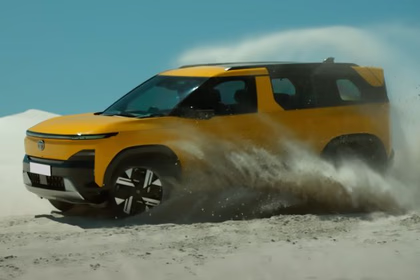
Headline
Tata Motors has announced that 2026 will be a defining year for the electric revolution in India, and it has already lined up some exciting models in its electric portfolio, including the Sierra electric vehicle, the new Punch electric vehicle, and the upmarket Avinya electric car. With this strategic initiative, Tata Motors is not only focusing on developing its electric vehicles for the mass and upmarket segments in India but is also sending a message to its rivals about design and advanced technology.
Sierra EV:
- Mid-size electric SUV, reviving the legendary Sierra name.
- Launch of the first half of 2026.
- Contemporary EV design with heritage-inspired touches.
- Enhances Tata’s SUV offerings for urban and semi-urban customers.
Punch EV (Updated Model):
- Refreshed design and tech in the compact electric SUV market.
- Launch together with the Sierra EV in the first half of 2026.
- Emphasizes affordability with improvements in connectivity and functionality.
- Strengthens Tata’s foothold in the low-cost EV segment.
Avinya (Premium EV):
- New electric vehicle luxury brand and concept platform by Tata Group:
- Expected launch towards the end of 2026.
- Lifestyle-oriented electric vehicle, equipped with advanced technology, luxurious elements, and software integration capabilities.
- Indicates Tata’s entry in the premium EV segment, competing with other premium EV market entrants.
Strategic Significance:
- Adds to Tata’s existing lineup of EVs in the premium segment.
- Strengthens Tata’s position as a leader in the EV revolution in India
- Indicative of Tata’s aggressive approach to electrifying critical vehicle segments. Challenges exist for existing players like MG, Mahindra, Maruti, and Hyundai.
Introduction
Tata Motors has always been forward this leadership position in electric cars in India. In, 2026 is an eventful year for Tata Motors, with new electric vehicles being lined up in various segments. Tata Motors has already confirmed plans to introduce three key electric cars in India, including revivals such as Sierra EV and Punch EV, and to enter new high-end markets through Avinya electric vehicles.
Tata Motors’ EV leadership in India:
- Positive experience regarding the sale of electric vehicles, charging infrastructure, and service quality.
“Tata Motors to Enter Electric Vehicle Business by 2018; To Launch
- Range of models launched, including compact, mid-size, and luxury models.
- Concentrate on modern designs, improved features, and Generation Next Electric Vehicle solutions.
- Aims to support Tata’s long-term sustainability and market leadership position.
Official Observation on Three EV MEGA Launches:
- Sierra EV: The mid-size electric SUV with a design nod to the heritage models.
- Punch EV (Updated Model): Upgraded compact SUV with better technology and design.
- Avinya: The premium electric vehicle brand and concept car, marking Tata’s foray into the luxury segment.
Tata Sierra EV
The Tata Sierra EV is an electric revival of one of Tata’s most iconic SUVs and promises to bring a great blend of heritage and modern electric mobility to the Indian market. The Sierra EV, expected to launch in the first half of 2026, will compete in the mid-size electric SUV segment, promising a mix of style, technology, and practicality. Design-wise, it’s expected to adopt modern EV styling with cues from the original Sierra, appealing to both nostalgia-driven buyers and new-age EV enthusiasts. Most likely to be based on Tata’s current or next-generation EV platform, the Sierra EV will add to the company’s SUV portfolio while reinforcing its leadership in India’s electric vehicle market.


- Revives Tata’s popular Sierra nameplate with a fully electric powertrain.
- Merges SUV ruggedness with modern EV efficiency.
- Addresses buyers focused on heritage and sustainable mobility.
Slice:
- Electric SUV- the mid-size.
- Situated between Tata’s smaller electric vehicles, like the Nexon EV, and future premium models from the brand.
Cues of design:
- Modern design with EV, closed fascia in the front, and aero features.
- Retains iconic Sierra elements: boxy silhouette, strong SUV stance.
- Interiors can be expected to combine tech features with SUV practicality.
Platform:
- Presumably based on the current EV platform at Tata-ALFA / Ziptron or the next-generation platform.
- Provides an efficient electric powertrain, increased range, and future software upgrades.
Significance:
- Expands Tata’s SUV portfolio in the EV segment.
- Appeals to nostalgia-driven buyers who loved the original Sierra.
- Underpins Tata’s commitment to style and electric mobility in the mid-size SUV segment.
Punch EV (Updated Model)
Tata Sierra EV is the rebirth of the most iconic Tata SUV as an electric model, bringing the best of the past and the future of electric mobility to the Indian market. Tata Sierra EV is expected to be launched in the first half of 2026 and will compete in the mid-size electric SUV segment in the Indian market. As for its features, it is expected to have a modern electric SUV design, drawing on some features from the previous Sierra. It will appeal to those who want to buy an SUV from the past, as well as to those passionate about modern electric SUVs. The Tata Sierra EV will be manufactured on Tata’s existing or next-generation electric SUV platform.


- Resurrects Tata’s popular Sierra brand moniker and positions it in the electric segment.
- Blends SUV ruggedness with EV efficiency.
- Targets customers who appreciate both history and environmentally friendly mobility.
Launch:
- Expected in the first half of 2026.
- A part of the initial 2026 electric vehicle wave in the Indian market, under the Punch EV brand.
- Fits Tata’s plan of gradual, segment-wise expansion in EVs.
Segment:
- Electrical mid-size SUV.
- Range: Positioned between Tata’s lower EVs, such as the Nexon EV, and upcoming high-end models.
Design Cues:
- Modern EV design with closed front fascia and aerodynamic details.
- Keeps the iconic Sierra design (boxy shape, strong SUV feel).
- Those interiors are supposed to integrate technology with SUV functional components.
Platform:
- Presumably based on Tata’s existing EV platform (ALFA / Ziptron) or the next-gen platform.
- Enabling more efficient electric powertrains, range extension, and software over-the-air updates.
Significance
- Adds to Tata’s portfolio of SUVs in the Electric Vehicle category.
- Appeals to nostalgic buyers who liked the original Sierra.
- Aligns well with Tata’s intent to emphasize style and electric mobility offerings in the mid-size SUV market.
Avinya: Tata’s Premium EV Leap
Avinya is Tata Motors’ bold foray into the luxury electric vehicle market. Tata Motors’ latest electric vehicle, Avinya, is planned to be launched by the end of 2026. Tata Motors’ new electric vehicle, Avinya, is intended to incorporate state-of-the-art technology, seamless integration with world-class software, and a luxurious design. Tata Motors’ latest electric car, Avinya, is designed to deliver exceptional vehicle performance and is based on Tata’s next-generation Gen 3 EV platform. Tata’s new electric vehicle, Avinya, marks the company’s major foray into the global market of luxurious electric cars.
New Premium EV Brand Concept:
- The plan is to make Avinya a standalone luxury EV brand under Tata.
- Emphasis was placed on lifestyle, luxury, and cutting-edge.
- Helps to distinguish Tata’s luxury models from the Nexon EV and Punch EV mass-market models.
Launch:
- Anticipado para finales de 2026
- Concludes Tata’s 2026 electric vehicle lineup, which includes Sierra EV and Punch EV.
Segment:
- Premium lifestyle electric cars.
- Targets upmarket consumers who want luxury, design, and technology.
- Placed above Tata’s existing lineup of EVs in terms of pricing.
Features:
- Highly advanced technology, such as connected-car functions and AI-driven interfaces.
- Advanced Software Integration for Seamless User Experience.
- Designing with luxury in mind.
Platform:
- Based on Tata’s next-gen Gen 3 EV platform.
- More efficient, with greater range and superior performance.
- Allows combining advanced technology with autonomy-ready capabilities.
Significance
- Indicates Tata’s entry into the high-end electric vehicle market.
- Embodies Tata’s vision to provide EVs to both mass and premium markets.
Tata’s Broader EV Roadmap
Tata Motors has announced that the upcoming electric vehicles will be lifestyle electric cars. All these developments highlight Tata Motors’ commitment to addressing the needs of different buyers of electric vehicles in the Indian market and supporting the cause of sustainable transport in the country.
Tata’s 5 New EVs by FY30
The models involved are:
- 2026 launches – Sierra EV, Punch EV, and Avinya
- More EVs in FY27-FY30 to capture the remaining market segments.
- Meets Tata’s long-term plan to electrify its products.
- Encompasses Mass-Market, Premium EV Segments,
Entry level:
- Punch EV.
- Mid-size SUV: Sierra EV.
- Premium/lifestyle car
- It helps Tata diversify its offerings for different customers at varying prices.
Charging Infrastructure & Sustainability Focus:
- Home and public charging solutions promotion.
- Environmental protection in manufacturing processes and participation in battery recycling programs.
Market & Strategic Impact
Tata Motors’ electric vehicle models in 2026 help the company maintain a strong lead in India’s growing electric vehicle market. It also gives the company a competitive lead over others in the market. Electric vehicles are anticipated to set the trend among buyers.
Reinforces Tata’s EV Leadership Position in India:
- Based on the success in Nexon EV and Tigor EV, and the already established EV eco-system.
- Expands its foothold in different price ranges.
- “It positions Tata as the brand one can rely on for good quality, more affordable, and high-end electric vehicles.”
Competitive Comparison: MG, Mahindra, Maruti,
- MG ZS EV and Mahindra XUV.e vs. Tata’s mid-size and compact EVs.
- Avinya competes in the luxury market with models like the MG Cyberster or the Hyundai Ioniq.
- Tata is positioned advantageously due to its combination of pricing, product offerings, and service networks.
Buyer Expectations and Industry Outlook:
- The rising consumer demand is for EVs with good practical range, technology, and reliability.
- Tata’s lineup for 2026 has set new benchmarks in the design, features, and pricing of electric vehicles.
- Expected to give a boost to EV sales in India, thereby prompting others to upgrade.
Conclusion
Tata Motors’ electric wave in 2026 is poised to be the defining shift in India’s electric mobility revolution. By giving the iconic brand name of Sierra a new lease of life in an entirely electric form, revamping the most successful Punch Electric in the market to conquer the masses with an even better offering, and also introducing Avinya with a lifestyle-focused electric mobility vision in the premium space, Tata Motors is yet again merging emotion with intentions. The future of electric mobility in India will not be black-and-white – one-dimensional – but rather a rainbow of experiences that will be emotional, feasible, and dream-worthy. 2026 is set to be the biggest year of launches in Tata Motors’ history.
EV Acceptance in India:
- The confluence of different segments of electric vehicles entering the market simultaneously would accelerate the adoption of electric cars across market audiences, from traditional legacy customers to first-generation owners of compact SUVs and lifestyle buyers.
- This will encourage greater model diversity, helping counter range- and price-related anxieties associated with EV adoption in the Indian market.
- Tata has a robust dealership and service network, which will go a long way in getting non-EVs to shift to EVs, particularly in non-major cities.
Charging & Infrastructure Growth:
- A larger number of EVs is expected to drive the expansion of fast-charging networks.
- The companies involved in these partnerships include Navinfo, BYD, etc.
- Increased growth in charging points reduces dependence on fuel stations, boosting confidence in buying long-distance EVs and aligning well with India’s mobility patterns.
Influence on Future Mobility and Competition:
- These launches will accelerate the electric vehicle roadmaps of Indian competitors such as MG, Mahindra, Maruti Suzuki, and Hyundai, as well as emerging global EV brands.
- Sierra EV will create interest in the segment, like the retro-modern trend in other countries, and Punch EV will retain Tata’s unbeatable affordability streak. Avinya launches India into the world of luxury EVs, driven by technology.
This combination would challenge the Indian car market to enhance the following technologies:
- Battery technology
- Infotainment UI
- Safety software
- Connected mobility services
- Sustainability & Battery Life Cycle Impact:
There will be increased support for battery recycling projects, second-life battery energy storage systems, and lithium-cell ecosystems.
Tata’s 2026 models help India achieve its net-zero targets by reducing carbon emissions, noise, and fuel imports.
The more electric vehicles on the road, the more innovation will occur surrounding future technologies such as autonomous assist systems, AI diagnostics, predictive charging, and efficient mobility solutions.
Long-Term Vision Strengthen
- These models underscore the basis for Tata’s “5 new EVs by FY30” strategy. These models reflect the long-term commitments the company has been making.
- 2026: The year of Tajtao TATA realizing the capability of the Indian market in making world-class electric vehicles. Establishes a future where consumers in India will adopt EVs, trust them, relate to them, and upgrade to them.
FAQs
Q1. What are the launch dates for Tata Sierra EV, Punch EV, and Avinya?
- Sierra EV & Punch EV: Expected in the first half of 2026.
- Avinya: Expected by the end of 2026.
Q2. Avinya will be what kind of new brand or model from Tata?
The new brand is expected to be a premium, electric-vehicle-focused brand, distinct from Tata’s current offerings.
Q3. In what way do Sierra EV and Punch EV differ from existing models?
Sierra EV: Contemporary electric SUV styling, rumored range, and tech advancements.
Punch EV: Updated design, enhanced software, safety, and network connectivity, without compromising affordability.
Q4. What ranges can we expect from batteries?
Although the official range specs have not been confirmed, it is estimated at approximately 300 to 500 kilometers.
Q5. Would these EVs be available pan-India?
Yes, Tata has planned a national launch, thanks to the growing charging points and dealerships.
Q6. Are these EVs exclusive to urban buyers?
Car Market in Other Countries:
- To expand further in the car market in other countries, we need a product lineup that appeals to a wide range of customers.
- Punch EV: Targeted towards city commuters and compact SUV buyers.
Q7. What is the impact of this lineup on Tata’s competitiveness?
This further cements Tata’s leading position in both the budget and high-end electric vehicle markets, which currently compete with brands like MG, Mahindra, Maruti Suzuki, Hyundai, and new entrants.