Introduction
Powered by a strong focus on SUVs, electric mobility, and safety-led engineering, Tata Motors has emerged as one of the most aggressive and influential carmakers in the Indian market Tata Cars. Technology-driven automaker competing head-to-head with global giants.
Tata Motors’ Recent Momentum in India
- Consistently among the largest passenger vehicle makers of India, based on high-demand models such as Nexon, Punch, Harrier, and Safari.
- Market leadership in the electric car segment is a significant contributor to the pie of EV sales in India.
- Strong consumer trust built around 5-star safety ratings and robust build quality
- This basically means successfully implementing a new design language seen in the Curvv and Sierra concepts.
- Expansion of the EV charging ecosystem and after-sales network in metro and Tier-2 cities.
Why Tata’s Future Launches Matter:
- The segment dominance of SUVs continues unabated in the Indian car market and in Tata’s overflowing pipeline, too.
- Increasing fuel costs and policy support are accelerating EV adoption; Tata is well-positioned to be a first-mover beneficiary.
- Introduction of next-generation EV platforms promises better range, faster charging, and improved performance.
What Readers Will Find in This Guide
- A complete list of every new Tata car expected to launch in India over the next two years.
- Expected timelines for launch with segment-wise breakdowns
- Key highlights, including design, powertrain options, range, and feature upgrades
- Estimated price positioning and probable competitors in each segment
Tata Motors’ Strategic Vision for 2025–2027
Tata Motors’ agenda is to achieve long-term dominance rather than short-term volumes. This sees increasing adoption of SUVs, EVs, and tech-savvy cars. This strategic approach combines rapid EV scaling with a portfolio of new ICE models to further consolidate the group’s lead in the electric mobility space while also securing its position in the SUV segment.
 Tata’s Product Plan and Market Strategy
- Dual track strategy involving both ICE vehicles and EVs for market coverage
- SUV and crossover models are available in large numbers across price bands
- Introduction of new generation platforms that are adaptable to different powertrains
- Moving slowly towards premium positioning within the higher segments while maintaining mass-market acceptability.
- Capitalizing on in-house EV know-how and synergies in the Tata group
Areas of Focus:
1) Electric Vehicle (EV) Segment:
- Electric models’ expansion into compact EVs, mid-size SUVs, and premium SUVs.
- Enhancing the line-up of SUVs via the launch of new vehicles, model overhauls,
- Introduction of advanced infotainment systems, connected technology, and digital cockpits.
- ADAS connectivity and integration in higher variants in accordance with the demands and expectations of buyers
- Emphasis on high crash safety standards & structural integrity
Tata’s Drive to Enhance the Electrical Offering
- Launch of next-generation EVs on dedicated electric architectures
- Enhancing Range and Charging Efficiency in Real-Driving Conditions
- Entering New pricing segments for Electric Vehicles to attract New and Upgrade Consumers
- Enhancing partnerships related to fast charging infrastructure in India
- The Long-term plan is to make EVs a strong pillar in Tata Motors’ PV biz.
Upcoming Tata Cars by Segment
The upcoming vehicles from Tata Motors are divided into segments catering to the fastest-growing segments of the Indian market, including electric vehicles, Sport Utility Vehicles/Crossover cars, and people’s cars. Tata Motors stays relevant in the market for the same customer segments it served in the beginning.
Electric Vehicles (EVs)
Tata is currently at the forefront of the EV industry in India, with plans to expand this lead by entering the lifestyle EV and electric SUV segments, offering both premium and affordable models.
- The Tata Sierra EV signals the carmaker’s comeback, reviving the legendary nameplate and giving it a fresh twist with the brand’s foray into the electric segment.
- It is likely to be a vital part of Tata’s strategy in carving out a niche for itself as a serious player in the luxury electric SUV market.
 Planned Release Period
- Probably making its appearance in late 2025, with market entry carrying over into early 2026
- Positioned as a showcase lifestyle model EV, not a high-volume product
- To be displayed in almost production-ready form before market launch
- Key Highlights: Design, Range Estimates, and Battery Technology
Retro-style design with modern SUV dimensions.
- Range of approximately 450 to 500 km on a single charge
- Incorporation of next-generation lithium-ion battery technology
- Rapid charging capability that minimizes charging duration
- High-quality interior and generous infotainment screens and connectivity options
Rivals & Positioning
- Placed above the Tata Nexon EV and below Luxury Brand EV SUVs
- Likely to face competition from models such as MG ZS EV and other mid-size electric SUVs.
- Oriented towards city consumers who look for fashion, innovation, and green features
New Tata EV Hatch/Sedan (Teased Concepts)
Tata is also working on other smaller EV-first products for the masses, likely based on concepts showcased at international and Indian auto shows.
What to Expect
- “Compact” dimensions that make them appropriate in a city driving context
- Clean, futuristic design language emphasizing aerodynamics
- Based on shared modular architecture
Enables improved range and efficiency
- Increased range in real-world driving scenarios compared to today’s competing EV offerings in the
Target Customer Base & Price Range
- Apt for First Car Owners and City Drivers
- Approximate price: Between ₹8 lakhs and ₹12 lakhs
- Positioned as a price-friendly entry point to e-mobility
Harrier EV / Curvv EV (If Applicable)
Electric variants of Tata’s best-selling SUV models will enable the automaker to introduce electricity into familiar models with less resistance from buyers.
Electric Versions of Popular SUVs
- Harrier EV introduced as a luxurious, performance-driven electric SUV
- “Curvv EV” is targeted at buyers seeking a sporty, coupe-bodied electric SUV.
- Design radar: Familiar design cues adapted for EV-specific styling features
Expected Specifications & Platform
- Designed on Tata’s dedicated next-generation EV architecture
- Range of approximately 450 to 500 km.
- Advanced battery management and thermal technologies
- Supporting rapid charging & intelligent connected cars
SUVs / Crossovers
SUVs remain the strength of Tata Motors, and upcoming models are planned to further strengthen the company’s presence in the compact, mid-sized, and premium markets.
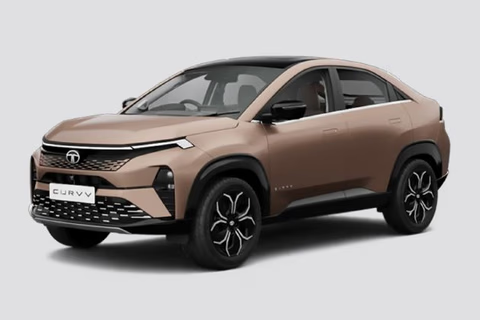
Tata Curvv
The Curvv embodies the ingenuity that showcases Tata’s design philosophy.
Launch Timeline
- Expected to arrive in 2025, both in ICE and electric variants
- Placed between Nexon and Harrier in the Tata lineup
- One of Tata’s most eagerly awaited design-driven launches
Features: Segment Positioning
- Sporty coupe-SUV design aimed at young consumers
- Well-appointed interior with generous infotainment and digital instrument display screens
- Features such as Advanced Safety Features, ADAS in higher variants
- Competes in a fast-growing mid-size SUV market
Updated Harrier / Safari Facelifts
Tata is working on an update cycle for its flagship ICE-powered SUVs to make them more competitive with new entrants.
What’s New
- Exteriors get an updated look with more defined features.
- Improved interiors in terms of materials and designs
- Improved infotainment and connected car functionalities
Safety feature upgrades across variants
- Engine and Transmission Options
- Ongoing usage of Diesel engines in the short term
- Integration of Hybrid Technology that would increase efficiency
- Electric variants to be developed under the Harrier EV brand name
Hatchbacks & Sedans
Although sport utilities rule the segment, Tata hasn’t shied away from more functional body types in the entry segment or in electric vehicles.
Next Tata Hatchbacks
A next-generation hatchback may help Tata increase its presence in the budget-friendly car segment.
Rumors & Rumored Specs
- Probably EV-first or available with various powertrain options
- Increased fuel mileage and reduced operating expenses
- Improved security when compared to other hatchbacks offered in the past
- More recent interior with basic linked features
Industry buzz, or the buzz on
- Limited Development of Sedans due to reduced Market Demand.
- Rise in Focus on Electric-Only Sedans as Demand Increases.
- MPV sales are set to be introduced only when combined with fleet solution offerings or EV mobility solutions.
Expected Launch Timeline (2025–2027)
| Q2 2025 | Tata Sierra EV | EV SUV | ₹22–28 lakh | Retro design, ~450–500 km range |
| Q4 2025 | Tata Curvv (ICE) | Mid-size SUV | ₹11–16 lakh | Coupe-SUV styling, feature-rich |
| Q4 2025 | Tata Curvv EV | Electric SUV | ₹18–22 lakh | Sporty design, long-range EV |
| Q1 2026 | Tata Harrier EV | EV SUV | ₹25–30 lakh | Premium tech, high performance |
| Q2 2026 | Safari Facelift | Premium SUV (ICE) | ₹16–27 lakh | Updated design, ADAS features |
| Q3 2026 | New Tata EV Hatch | Compact EV | ₹8–12 lakh | City-friendly, low running cost |
| 2027* | Sierra ICE | Lifestyle SUV | ₹15–20 lakh | Modern take on iconic nameplate |
What to Expect in Features & Technology
Over the next two years, the upcoming models from Tata Motors are expected to display a distinct drift towards more innovative, cleaner, and more premium offerings. The upcoming models will not only focus on innovation in body types and engines, but also on improving the overall buying experience through enhanced technology, safety, and interiors aligned with international standards.
Electric and Hybrid Powertrains:
- Introduction of next-generation EV platforms with higher energy density
- Enhanced range in real-world driving scenarios due to increased battery efficiency
- Support for fast charging helps to minimize downtime for long journeys.
- Analysis of Hybrid Technology to Fill the Gap between ICE and EV Technology Adoption
- Improved driving dynamics, instant torque in electric variants
Infotainment & Connectivity Solution Providers category
- More advanced touchscreen infotainment systems with higher-resolution screens
- Improved user interfaces with faster response times and the ability to update over the air (OTA)
- Wireless Android Auto and Apple CarPlay connectivity
- Improved voice command capabilities for in-car operating systems
- Fully Digital Instrument Clusters with Customizable Layouts
Safety Enhancements (ADAS, 5-Star Crash Ratings)
- Wider adoption of ADAS in premium variants
- These include: adaptive cruise control systems, lane-keeping assist systems, and Automatic emergency braking systems.
- Enhanced commitment to achieving 5-star safety ratings in crash tests
- Higher use of High Strength Steel and Reinforced Bodies
- Additional standard safety features, such as multiple airbags and electronic stability control.
Better Seating Comfort and Ergonomics
- Ambient lighting and panoramic sunroof in higher variants
- Features in a Connected Automobile
- Upgraded telematics solution capable of real-time vehicle tracking.
- Remotely controlled functionalities such as lock/unlock, climate control, and charging status.
Predictive Maintenance Alerts and Service Reminders
- Being compatible with smartphones and smart home systems
- Data-driven insights for optimizing driving efficiency and the convenience of vehicle ownership
Tata’s Competitive Advantage
The strength of Tata Motors lies not only in the number of launches lined up, but also in the ecosystem the company has created in terms of affordability, safety, and electric mobility, among other areas. Tata Motors has already reached scale in these areas compared to its competitors, which are still learning and understanding the nuances of the country’s market requirements. Tata Motors has the distinct advantage of launching a new range of vehicles in the country.
Manufacturing & Cost Efficiencies
- A strong domestic manufacturing base enables control over production costs.
- The higher the localization of components, the less the country will depend on imported components.
- Using common platforms and powertrains across multiple models enables greater economies of scale.
- Aggressive pricing without impairing the safety or quality of manufacture
- Effective supply chain management leveraging Tata Group synergies
EV Ecosystem (Charging, Service Network)
- Early-mover advantage in India’s electric passenger car market
- Tata Group companies support the expansion of charging points across public and home charging networks.
- Increasing EV-trained service centers across major cities and Tier-2 cities
- Combined ownership experience, including charging, service, and roadside assistance
- Regular updates to software in EVs, as well as remote diagnostics.
- Nexon and Punch are usually counted among India’s top-selling SUVs.
Record of dependability and value for money
- “The positive diffusion of the idea of safe and accessible transportation, in the end, is
- Existing market for repeat business. This comes from the fact that this company has its core base within the
- Strong emotional connection from the buyers due to the Indian Origin and trust aspect
Price Expectations & Market Impact
Pricing for Tata Motors’ upcoming models is likely to be structured to balance innovation and affordability. This is one of Tata’s foremost strengths. Tata’s endeavor to cover various price segments can help the company tap customers from both the novice and premium SUV segments. It can further expedite the adoption of electric vehicles in India.
Price Bands for the Flights
- Entry-level EV sedans/hatches: ₹8-12 lakhs. Primarily targeting urban commuters and first-time buyers in the electric segment.
- Tata Curvv ICE: ₹11 lakh to ₹16 lakh, targeting the mid-size SUV segment.
- Tata Curvv EV: starting from Rs. 18 lakh to Rs. 22 lakh. It aims to capture the
- Tata Sierra EV: Starting from ₹22 lakh to ₹28 lakh, catering to the premium lifestyle offering in the electric SUV segment
- Harrier EV: starting at around 25-30 lakhs. Targeted at people who look for a powerful range of electric SUVs.
- Harrier/Safari refreshers (ICE): ₹15 lakh – ₹27 lakh, depending upon variants & features
Maruti, Hyundai, Mahindra, or Toyota
- This pressure on Maruti Suzuki to speed up the development of EVs and SUVs.
- Places pressure on Hyundai and Kia to enhance safety features and EV competitiveness through pricing.
- Competes with Mahindra for leadership in electric SUVs with robust alternatives
- Calls on Toyota to diversify its India plans beyond hybrid vehicles.
- The competition in the ₹10-30 lakh SUVs & EVs segment intensifies.
Impact on the Indian Automobile Market & Electric Vehicle Adoption
- Promotes EV acceptance by offering more alternatives across price points
- Paves the way for mass adoption of EVs among mainstream societies
- Affects expectations regarding safety, technology, and design expectations
- Amplifies investments in charging point infrastructure and EV-related services
- It portrays Tata Motors as a key driver of India’s transition to electric mobility.
Expert Commentary & Industry Buzz
Industry experts consider Tata Motors’ upcoming lineup to be one of the most ambitious attempts in the country in recent years. It is observed that putting together a well-balanced lineup comprising EV-focused models, facelifted ICE-based SUVs, and design-focused concept cars might not be sufficient for Tata Motors merely to protect its market share but to change consumer behavior in the future.
Analysts’ Views on Product Launches
- Experts believe that Tata’s EV-dominated roadmap is the logical continuation of its first-mover advantage.
- “Sierra EV and Harrier EV are viewed as image-carrier models, and not volume-drivers,” one industry person said. “The strategy
- The Curvv is expected to attract young buyers and first-time upgraders to the SUV segment.
- “Safety-led positioning helps Tata Motors maintain its edge over its competitors, which mainly focus on pricing.
- The platform-sharing strategy is applauded for enabling low costs.
Potential Risks and Delays
- Battery sourcing issues may affect EV market entry schedules.
- The development of EV charging infrastructure may not occur at the same rapid pace as EV adoption.
- Semiconductor or raw-material market fluctuations may affect pricing.
- Delays in ADAS localization might impact the availability of features.
- Competitive pressure may lead to frequent price changes.
Consumer Expectations
- Consumers demand increased real-world range when buying electric vehicles and faster charging speeds.
- Increased demand for ADAS and connected services in mid-range vehicles
- Larger emphasis on safety ratings and quality of build
- Desire for high-quality interiors without high-quality prices
- Raised expectation of dependability and enhanced after-sales service
Conclusion
The plans unveiled by Tata Motors over the next two years make a clear statement: the brand is going through an evolution—the likes of which will not only add value to what’s currently being offered but also plan for the future. The company plans to launch electric SUVs named Sierra EV & Harrier EV, design-focused models such as Curvv, and facelifts for its currently successful models to encompass the entire growing category in the Indian market.
The most important aspects to look out for are the actual range offered by electric vehicles, charging speed, price disclosures, and the availability of next-gen safety features across more models. Launch plans, the distribution of features across models, and readiness in after-sales service would go a long way toward determining consumer purchases.
Keep yourself updated on the upcoming models from Tata Motors. Subscribe to the newsletter to get the latest news on the pricing and launch of the new models. Also, register for test drives to get a ride in the next-generation Tata Motors vehicles as they are rolled out in India.
FAQs
Q1. What are the upcoming Tata models in India in the next 2 years?
The Tata group of companies is likely to roll out models such as Tata Sierra (ICE & EV), Tata Curvv (ICE & EV), Harrier EV, Safari facelift models, and other electric hatchback models on next-gen EV platforms.
Q2. Tata to focus on electric cars rather than petrol and diesel cars?
Yes. Tata has an electric-vehicle-centric roadmap, but the development of ICE models and updated versions continues alongside the manufacture of electric vehicles to attract a broader customer base.
Q3. When will the Tata Sierra come out in India?
The Tata Sierra will be rolled out in late 2025 or early 2026. There will be both ICE and electric models.
Q4. What is the price range for the new Tatas?
The price range could start at ₹10 lakh for entry-level variants, rising to ₹30 lakh or more for premium variants such as the Harrier EV and the Sierra EV.
Q5. Yes, the new Tata automobiles will be equipped with ADAS technology.
Yes. Most of the new Tata models would come equipped with ADAS features, such as multiple airbags, and would have a high rating from Global NCAP.
Q6. Is Tata launching any new hatchbacks or sedans?
Tata is expected to launch new electric hatchbacks, while it has even considered restarting some compact car models with EV-first lines. However, sedans have fewer models at present.
Q7. Out of the Tata EVs to be launched, which would have the maximum range?
Range Tata Sierra EV & Harrier EV: Expected mileage range of around 450-500 km, the most extended range for Tata’s EVs until now.
Q8. Tata’s upcoming models – will they compete with Maruti, HYUNDAI, and Mahindra?
Tata is gearing up for competition through aggressive pricing, the focus on safety, modern designs, and the development and expansion of the electric vehicle ecosystem.
Q9. Do Tata Motors officially confirm these launch dates?
Most of the timelines follow the industry reports, concept showcases, and Tata’s public roadmaps. The official launch announcements can change.
Q10. Should customers keep waiting for the upcoming Tata models and purchase the existing ones instead?
If, say, you prefer to stay updated on the latest technology, electric vehicles, or new models, then perhaps it’s worth waiting. However, for now, the existing models that Tata has to offer are still excellent value for money and have proven themselves.