Introduction
The “electric revolution” is no longer restricted within the boundaries of cars; two-wheelers are set to enter the high-voltage competition as well. Among these, Ultraviolette F77 is making headlines, giving tough competition to traditional 300cc petrol Motorcycles sold in large numbers within India.
Boasting zero lag due to its “Instant Torque,” “Futuristic” Looks, and an “Electric” cockpit empowered with Today’s Technology, F77 raises an important question among bikers: Will an “Electric” bike ever be capable enough to match, let alone beat, the raw “performance” offered by traditional Motorcycles?
Rise of Premium EV Motorcycles in India:
- The EV market in India is expanding swiftly, with assistance from government incentives such as FAME II, which promotes two-wheelers.
- The high-end EV motorbikes are finding popularity with city bikers who want performance without compromise.
- Consumers are increasingly attracted to low operating costs, low maintenance, and sustainable factors associated with high-performance EVs.
- “Riders are now thinking about EVs as a mode, not just for transport but as a lifestyle experience for adventure and speed. You will be hard-pressed to find someone who doesn’t have an EV.
- Companies like Ultraviolette Automotive are bridging the gap that is created between commuting EVs and performance-centric petrol motorbikes.
Ultraviolette F77 as Market Disruptor:
- The F 77 competes with 300cc models like the KTM 390 Duke, Yamaha R3, and Honda CB 300R.
- It replaces performance with immediate torque response, rapid top speed, and better handling dynamics.
- Technology plays an important role: Technology Differentiators: Smart TFT display, ride modes, traction control, and regenerative braking are features that make it easier and safer.
- The F77 defies traditional cost vs. benefit analysis, as it costs more initially but requires less maintenance.
- It’s more than just a bike; it’s a signifier of a mindset change because it marks the entry of high-end EVs as serious contenders within India’s performance bike market.
Indian Motorcycle Landscape
The Indian motorcycle market has traditionally been driven by a combination of commuting and performance motorcycles. Within these, the 300cc category has created a special zone for itself. It is for people who want the performance, aesthetics, and usage capabilities. These are highly aspired and at the same time useful – suited for daily commutation, weekend cruising, as well as long drives. But with the entry of electric vehicles, this settled domain is set for a transition. The performance EVs, like the Ultraviolette F77, are set to disrupt the traditional parameters that have existed within and for the 300cc category.
Evolution of 300cc Bikes
- 300cc motorcycles have been termed as “entry premium” category as they provide aspirational value but at a cost that isn’t too outrageous compared to 1-liter motorcycles.
- These cars are performance-based with lively acceleration, lithe handling, and stable high-speed performance.
- KTM Duke 390, Yamaha R3, and Honda CB300R have already created benchmarks about design, reliability, and touring capabilities.
- Perfect for young riders who want something that blends with the surroundings while offering immense power and functionality.
- The area has experienced growth due to rising discretionary income, as well as aspirational lifestyles and global performance bike trends.
Traditional Benchmarks (Rider Expectations – 300cc Petrol
Acceleration and Speed
- Fast 0-to-60 km/hr acceleration and rapid top-end speeds for enthusiasts.
- Torque & Engine Response: Smooth and punchy torque for city and overtakes on highways.
- Comfort and Ergonomics: Designed with well-structured seating, suspension system, and fuel range for prolonged commutes.
- Reliability and Service Network: Spare parts and service locations are widely available all over India.
- Aesthetics and Branding: Sleek designs, rich materials, and an attractive brand presence factor significantly.
Pointed Emerging EV Narrative:
- The government and initiatives such as FAME II offer subsidies, tax benefits, and infrastructure support.
- A new thinking paradigm is emerging among consumers, who will prioritize factors like environmental impact and operating costs.
- Car travel patterns seen in urban areas favor EVs because they are emission-free, noise-free, and easy to maintain.
- Fast EVs offered by new start-ups have given people an aspirational alternative to conventional petrol bikes.
- Early adopters and tech enthusiasts are fueling the movement toward social proof, and it’s a community that prefers innovation and rejects the legacy of conventional petrol.
Introducing the Ultraviolette F77
The Ultraviolette F77 marks India’s entry into the performance electric motorcycle market with aplomb. The brainchild of Ultraviolette Automotive, a start-up based out of Bengaluru, the F77 is more than an electric motorcycle – it’s a statement. It boasts cutting-edge innovation and rider-centric designs that rival conventional 300cc petrol motorcycles on more than a few counts. It marks a paradigm shift in India’s two-wheeler market as it proclaims that an electric motorcycle doesn’t have to be a compromise on any front. It will appeal to and thrill.
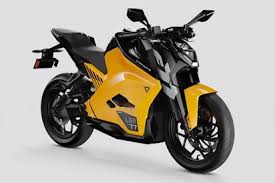 Brand & Vision (Ultraviolette Automotive – Performance EV from India):
- Based in 2015 at Bengaluru, Ultraviolette Automotive focuses on making high-performance and smart electric motorcycles for worldwide standards.
- Vision concentrates on blending speed, technologically driven designs, and sustainable methods within a single luxury EV.
- The F-77 is their flagship model, which shows India’s capability in making EVs that can match global performance motorcycles.
- The brand focuses on locally innovating designs for batteries, motors, software, and aerodynamics.
- Ultraviolette focuses on tech-conscious and urban riders who appreciate performance and the latest technologies.
Tech DNA: Battery, Motor, Chassis, Aerodynamics:
- Battery: The high-density Li-ion battery pack boasts a range of 130-150km and supports fast charging.
- Motor: 25-30 kW electric motor with an instantaneous torque feature for rapid acceleration from standstill to road cruising.
Chassis and Suspension
- Aluminum chassis with sport suspension for stability, agility, and comfort on an extended journey.
- Aerodynamics: Bodywork shaped for better streamlining and thus reduced drag, with an emphasis on better range and high-speed stability.
- Smart Features: TFT display with ride modes, Connect app integration, regenerative braking, and torque map.
Designed to Compete with Performance Petrol Bikes:
- It competes with 300cc street and sports bikes like KTM Duke 390, Yamaha R3, and Honda CB300R.
- Centers on experience with performance riding as opposed to mere city commuting.
- Marketed as a luxury lifestyle brand that integrates speed with innovation and an eco-philosophy.
- Targets early adopters who are drawn to the fun of petrol bikes but want the benefits of EVs – quick acceleration, easy maintenance, and a futuristic look.
- It sets a benchmark for Indian EV start-ups who target the high-performance motorcycle sector.
Performance Comparison
The area where the Ultraviolette F77 competes with conventional 300cc motorbikes on the basis of performance. Unlike conventional petrol motorbikes, which have to be revved up to gain speed, the Ultraviolette F77’s electric motor helps it accelerate instantly. Apart from sheer acceleration, various factors like its sports handling and balance ratio have also been designed and engineered with performance as an objective.
Introduction
- F77 Output vs 300cc Bikes: Ultraviolette F77: 25-30 kW ≈ 34-40 hp, 90 Nm maximum torque; maximum torque available from 0
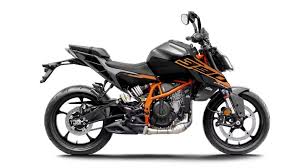
- KTM 390 Duke: 44bhp, 37Nm, Linear increase, Rev dependent.
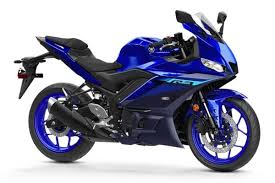
- Yamaha R3: 42 bhp, 30 Nm, Smooth rev pattern but delay before initial punch compared with EV.
- Honda CB300R: 31bhp, 27Nm; very torquey but requires revs for maximum power.
Instant Torque vs Petrol Power Curve:
- F77 develops maximum torque instantly, giving it lightning-quick acceleration without clutch intervention.
- Petrol Bikes display an intermittent display of power – acceleration will improve with an increase in RPM.
- The riders get a ‘push-in-back-of-seat’ effect on the F77 as against progressive on petrol 300cc.
- EVs have linear and predictable power delivery, with no rhythm interruption from gear shifts.
Acceleration & Top Speed
Acceleration and maximum speed are usually the first things enthusiasts want to check. The F77 will surprise everyone with acceleration performance comparable to 300cc sports bikes.
60 / 0-100km/hr Comparison:
- F 77: 0–60 mph 3.1 sec, 0–100 mph 7.5 sec; acceleration times approximate OEM specifications and match OEM times on dry pavement.
- KTM 390 Duke: 0-60 kmph – 3.9 seconds, 0-100 kmph.
- Yamaha R3: 0-60 km/h: approximately 4.0 seconds, 0-100 km/h
- Honda CB300R: From 0-60 km/hr in 4.5s, 0-100 km
Sprint Feel and Responsiveness:
- F77 represents an immediate acceleration without any need for gear changes.
- Petrol bike acceleration needs skilled control involving the throttle and clutch.
- Mid-range overtakes on F77 are easier because of linear torque.
Speed Figures:
- F77: Maximum speed approximately 147 km/h (electronically restricted); sufficient for highway driving.
- KTM 390 Duke: 167 km/h
- Honda CB300R: 130 km/h.
Although some 300cc bike models have better top-speed performance, F77’s acceleration performance makes it better suited for city and turn riding.
Riding Dynamics
The riding dynamics are what make a motorcycle have character. The F77, with its electric motor and chassis, presents a completely new riding experience for riders accustomed to petrol motorcycles.
Chassis Stiffness and Handling:
- Its frame is made from an aluminum alloy that makes it light and ensures rigidity
- Sports-tuned suspension helps soak up road bumps while still cornering well.
- Having a lower center of gravity, thanks to batteries, enhances cornering stability and eliminates wobble at high speed.
- Brake response with regenerative braking support enhances agility on twisty routes.
Weight Distribution vs. Traditional Bikes:
- F77: Placed heavy battery low and central. It enhances balance and reduces imbalances between front and rear weight.
- Petrol 300cc Bikes: Weight distribution – engine weight greater and more forward. Aggressive cornering might make the bike appear nose-heavy.
- Rider sustains better stability when cornering and transitioning from lane to lane on F77 compared with petrol competitors.
Range, Charging & Usability
Performed capabilities have usually garnered more popularity, but functionality and usability are necessary for regular riders. The Ultraviolette F77 manages to deliver adrenaline experiences with actual range and charging functionality, as well as rural-to-urban adaptability. To make sense of how it fares against regular 300cc petrol scooters, understanding its value and disadvantages as an electric bike would be essential.
- F77 Actual Range vs Highway/City Use:
- Range: 150 km on a single charge; actual average range: 130-140 km.
- The city ride benefits from regenerative braking – could improve range slightly in heavy traffic conditions.
- Highway rides with constant speed may result in a range of approximately 110–120 km.
- Riders should organize charging points for lengthy trips; perfect for daily commutes and short weekend outings.
Comparison with Petrol Bike Range Flexibility:
- 300cc petrol bikes provide an average mileage ranging from 350-450 km per fuel refill.
- Petrol bikes can be refueled within 5-10 minutes at any fueling station, but EVs need a considerably longer period for charging.
- F77 prefers city commuters or owners with access to charging facilities at home and at work, and petrol bicycles for long-distance tours.
- Charging vs Refueling
Charging Times:
- Standard Lev2 AC charging: approximately 6-7 hours to fully charge.
- FastDC charging: ≈ 50% in 45-50 minutes
- Pairs with available charging stations and residential charging stations; charge status and completion time indicated on smartphone app.
Petrol Station Convenience vs. Charging Ecosystem:
- Petrol Bikes will refuel anywhere within minutes, with 24/7
- The EV charging infrastructure in India is still evolving and is largely available at some select highways and major cities.
- An expanding number of fast-charging stations are being set up by start-ups and automakers, making it easier for intercity travel
- Riders would have to map out ways based on charging station locations for intercity routes.
- City Snarls vs. Highway Touring
- F77 performs perfectly on urban roads: it develops torque immediately, and it moves very quietly and smoothly while filtering traffic.
- Highway touring is possible within 100-120 km ranges on a single charge, but planning is necessary for longer routes.
- It requires less maintenance and does not have clutch gear shifts. It will reduce fatigue caused by operating in stop-and-go traffic
Battery Heat Management and Regen Braking Experience:
- The battery management system keeps a stable temperature even at a high ambient temperature.
- It supports regenerative braking and smoothens it, so it can be controlled through ride modes.
- It reduces wear on mechanical brakes, improves range slightly, and helps improve braking safety and control.
Features & Technology
The Ultraviolette F77 is more than an acceleration and torque weapon; it’s an embodiment of cutting-edge motorcycle technology. From its features and gauges to ergonomics and designs, every bit of the motorcycle has been engineered with the focus solely on delivering a better ride experience and ease. When compared with traditional 300cc petrol-powered motorcycles, the F77 uses intelligent technologies.
Instrumentation (TFT display, connectivity, app functionality):
- Full-color TFT display with user-selectable views for speed, battery, range, and ride modes.
- Smartphone compatibility via Bluetooth: phone calls, opening messages on the screen.
- Dedicated mobile app for real-time diagnostics, GPS tracking, charge status, and service alerts.
- Onboard trip analytics and logging capabilities for enthusiasts interested in acceleration, energy consumption, and efficiency.
Riding Modes, Torque Maps, and Traction Control:
- Multiple ride modes (Eco, Sport, Ride) for efficient power distribution and optimal range.
- Customizable torque mapping enables riders to match acceleration effects as per their desire.
- Regenerative braking strength varies according to modes.
- Safe Tech List: ABS, Regen Sensitivity, Smart Features
- ABS with dual-channel performance for stable braking on different road surfaces.
- The regenerative braking system helps slow down the bike and charge the batteries at the same time.
- Smart diagnostics will alert the rider to the status of the battery, tire pressure, and maintenance.
- LED indicators and hazard lights.
Premium Features (Fit and Finish, LED Lighting, Ergonomics)
- Aerodynamic body panels with excellent paints and finishes. It competes with the best petrol bikes.
- All-LED headlight, rear light, and turn signals.
- It boasts convenient and ergonomic seating perfect for city drives and weekend outings.
- A focus on minute details: premium grips, switchgear, and control components on the handlebars.
Cost of Ownership
Although performance and specifications are very necessary, it’s because of the economics associated with its usage that it becomes a decisive factor. First and foremost, being a high-end electric bike, the cost associated with buying an Ultraviolette F-77 will be higher compared to any 300cc conventional petrol bike. But on the cost side, it’s a completely different scenario.
- UpFront Price:
F77 Pricing vs Typical 300cc Bikes:
- Ultraviolette F77: ₹3.0–3.5 lakh (ex-showroom, India).
- KTM 390 Duke: ₹3.0–3.2 lakh.
- Yamaha R3: ₹3.5–3.7 lakh.
- Honda CB300R: ₹2.9–3.1 lakh.
Cost Perception EV Premium vs Petrol Performance Bikes:
- Higher initial cost of F77 because of its advanced technology, immediate torque, easy maintenance, and sleek designs.
- Petrol engine bikes hold on to traditional aspirational value but might end up with additional costs.
- Buyers feel that F77 is a lifestyle product and not merely a daily commuting bicycle.
- Running Costs
- Electricity Cost per km vs Petrol Cost:
- F77: Not applicable. The cost will depend on the prevailing rates of electricity and charging efficiencies. ~
- 300cc petrol bike: ≈₹4-₹6 per km
- Fuel cost ≈₹110-
- Notable savings with F77 in the long run, with particular emphasis on daily traveling.
Maintenance Differences
- F77 requires fewer components movement-wise, thus no engine oil change, clutch adjustment, or gearbox service.
- Brake wear decreased because of regenerative braking.
- Petrol bike engines need periodic servicing, chain maintenance, and sometimes valve adjustment.
- The simpler mechanical components of F77 result in fewer service calls and less cost associated with them.
- Resale Value & Long-term Ownership
- The resale market for EVs is still developing within India, regarding the longevity of batteries, warranties, and market demand.
- Petrol 300cc Bikes have set some resale trends, easy to sell in cities.
- Pioneers with F77 may be able to leverage brand recognition and scarcity for a short-term advantage.
- It will be an inexpensive possession for the prolonged period as there will be very little expenditure on running it, despite low depreciation rates.
Rider Experience & Community Buzz
The Ultraviolette F77 isn’t only making waves on paper, as riders who have thrown a leg over the bike speak to its blend of performance, technology, and comfort. Whether it’s on city streets or twisty highways, the riding experience is both futuristic and familiar at once. Feedback from the community, testimonials, and chatter on social media note the growing recognition of the F77 as a serious alternative to 300cc petrol bikes, denting longstanding preconceived notions about electric motorcycles.
Testimonials from Owners/Riders:
- Riders comment on instant torque and smooth acceleration.
- Many appreciate the quiet yet responsive ride, which makes commuting through a city stress-free.
- Appreciation of high build quality and advanced technological features such as TFT display, riding modes, and connectivity.
- Riders talk about the minimum maintenance and home charging as a convenience, reducing downtime.
- Overall sentiment: “Feels like a performance bike, but smarter and more futuristic.”
How F77 is Viewed Among Petrol Enthusiasts:
- Initially sceptical riders of petrol bikes are impressed by the acceleration and handling.
- Some enthusiasts still believe in petrol bikes for top-end speed and longer touring range, but give points to F77 for its performance in cities.
- Perceived as a disruptive alternative: it marries the thrill of sport bikes with environmentally conscious benefits.
- A bold step in the premium EV segment of India, which has earned respect even amongst traditional riders.
Social Media & Enthusiast Community Sentiment:
- Lively discussion in Facebook groups, Instagram reels, and YouTube reviews, praising the design of F77 and the ride experience.
- Trending topics: “EV performance vs petrol”, “Best urban sport EV”, “Ultraviolette F77 test rides”.
- Community feedback often points out fun factor, tech integration, and running cost on the bright side.
- Huge community of early adopters, sharing best practices, charging hacks, and ride meetups for F77 owners.
Market Impact & Disruption Narrative
The Ultraviolette F77 is more than just an electric motorcycle, as it marks a paradigm shift in the Indian two-wheeler market. By competing with 300cc petrol motorcycles, it breaks traditional boundaries and molds perceptions about price, performance, and usage. Its success shows that high-performance EVs have market appeal and can shake traditional methods of selling and buying motorcycles, propelling EVs into mainstream popularity.
Why a Premium EV Bike Changes Segment Dynamics:
- Redefines performance parameters: Torque and linearity defy conventional petrol bike norms.
- It requires low operating costs and maintenance, which impacts the cost-benefit equation for commuters.
- Adds technology-driven differentiation – Connectivity, ride modes, Smart Battery Management.
- It can be considered as a lifestyle product, which attracts tech-aware people who reside in big cities and who prefer sustainability and innovation.
- It sets a new benchmark among aspirational brands, putting pressure on 300cc petrol bikes to develop and remain relevant.
Traditional OEM Strategies – Responding to EV Threat:
- Companies such as KTM, Yamaha, and Honda are working on concepts related to hybrids/electric or EVs.
- Certain OEMs have upgraded petrol bike models with better features, lighter weight, or better fuel efficiency.
- R&D expenditure on batteries, e-drives, and Smart motorcycle platforms.
- The modes of marketing and selling these tires have started emphasizing eco-friendly performance.
Broader EV Adoption in India’s 2-Wheeler Ecosystem
- Government incentives such as FAME II and state incentives are fueling adoption.
- Increased charging points, both public and private, favor longer journey times and urban transport.
- The times are changing – EVs are no longer “commuter-only” brands; luxury EV motorcycles are desirable.
- Startups like Ultraviolette are proving that made-in-India high-performance EVs have a competitive edge against foreign brands.
- Rising visibility of performance EVs leads to early adoption and subsequently drives network effects.
Challenges & Counterpoints
Although it performs remarkably and boasts an impressive and futuristic appeal, there are some challenges that affect the adoption rate with regard to the Ultraviolette F77. Range, cost, infrastructure, and battery life are some very essential factors that need consideration, not just for buyers but also for the industry as a whole.
Charging Infrastructure Hurdles:
- Fast-charging stations have not yet become common outside large cities and certain highways.
- Irregular charging standards might result in compatibility problems with some charging stations.
- Those who reside in urban areas and do not have parking space within their homes for charging will find it very convenient to have these charging stations.
- Long-distance journeys need a careful planning strategy for charging stations.
Range Anxiety vs Petrol
- F77 earth ranges approximately 130-140 km, but may be restrictive for intercity sightseeing as compared with gasoline-powered motorbikes that have 350-450 km per charge.
- Fueling a petrol car is very fast and widely available, as compared to EVs.
- Consumers may be reluctant to change from petrol motorbikes because they do not want to be left alone on the roads.
Price Premium Acceptance Indian Market:
- The price range for F77 at approximately ₹3-3.5 lakh seems higher compared with regular 300cc motorbikes.
- The price paid at the time of buying and fuel/maintenance savings will be balanced.
- Consumers might be hesitant despite the benefits due to price considerations.
Battery Degradation Concerns:
- Lithium-ion batteries will deteriorate with age, which could impact range and performance.
- Replacement costs are still high, but warranties help ease worries.
- It may suffer from extreme temperatures or charging practices.
- Education and awareness on battery health management are imperative for customer satisfaction.
Future Outlook
The Ultraviolette F77 has broken the ice, but it is just the beginning of a whole new chapter for high-performance electric motorcycles in India. With innovative developments and an increasing buzz among customers, the super cycle EV sector is soon going to see a revolution. The startups and mainstream Automobile giants are soon going to act on the rising EV sector and will soon change the face of the 300cc motorcycle market.
Upcoming Variants/Technologies for Ultravio
- Introduction of F77 Pro or F77+ variants with greater range, developments in battery technologies, and rapid charging.
- Improves motor performance and new software for smooth torque and ride.
- It will offer more advanced connectivity functions, such as OTA updates and better app functionalities.
- Weight-reducing materials and aero enhancements for improved handling.
- Working with infrastructure partners for expanding charging points and helping with long-distance travel.
300cc Segment Evolution — Fuel Bikes’ Next Moves:
- The conventional 300cc motorcycles are set to receive upgraded performance, feature enhancements, and weight reduction.
- Some OEMs are considering hybrids and mild electric variants as transition models.
- Emphasize high-end designs, intelligent technologies, and better fuel economy.
- Market differentiation could be dependent on after-sales services, brand loyalty, and resale value.
The forecast changes in premium motorcycle buying behavior:
- Rising willingness among city enthusiasts and technologically aware consumers to own EVs.
- Those who value low running costs, easy maintenance, and eco-friendliness over conventional petrol and thrill.
- Adoption based on peer influence, visibility on social media, and relative performance with petrol bikes.
- Development of EV communities and experiences with test drives that will impact market purchases.
- A drift towards more technologically driven, lifestyle-based motorcycles and not just engine-centric ones.
Conclusion
The Ultraviolette F77 represents a bold leap in India’s premium motorcycle landscape, challenging the dominance of traditional 300cc petrol bikes. With its instant torque, advanced technology, and futuristic design, it delivers a riding experience that rivals — and in some areas surpasses — petrol counterparts. While infrastructure and price remain hurdles, the F77 is a clear indicator that electric motorcycles are no longer limited to commuter segments but are now serious contenders in the performance space.
Does the F77 Genuinely Disrupt the 300cc Class?
- Matches or exceeds petrol bikes in acceleration, torque delivery, and urban handling.
- Introduces technology-led advantages like ride modes, connectivity, and smart battery management.
- Reduces running and maintenance costs significantly compared to 300cc petrol bikes.
- Challenges traditional rider perceptions and starts a shift in premium two-wheeler expectations.
Balanced View: Who Wins Under What Circumstances?
- F77 Wins: Urban riders, tech enthusiasts, eco-conscious consumers, and daily commuters valuing instant torque and low maintenance.
- 300cc Petrol Bikes Win: Long-distance touring, highway enthusiasts, buyers preferring higher top speeds, quick refueling, and established resale networks.
- Both have unique strengths; choice depends on rider priorities, budget, and riding environment.
Call to Action:
- Encourage potential buyers to book test rides to experience instant torque and smart features firsthand.
- Join F77 rider communities for insights, tips, and shared experiences.
- Monitor the growing EV ecosystem — infrastructure improvements and upcoming variants make premium EV ownership increasingly practical.
- Explore broader adoption of electric motorcycles as a viable alternative in India’s performance segment.
FAQs:
Q1. How much does the Ultraviolette F77 cost in India?
The price range of F77 varies from ₹3.0-3.5 lakh, ex-showroom, equivalent to some 300cc
Q2. How is the performance of F77 compared with 300cc petrol bikes?
It packs immediate torque, 0-100 km/hr in approximately 7.5 seconds, and highly maneuverable handling, competing with KTM 390 Duke, Yamaha R3, and Honda CB300R.
Q3. What is the actual operating range of the F-77 aircraft?
Range: approximately 130-140 km on mixed city and highway driving, potentially lowering it to 110-120 km on pure highway driving.
Q4. How long does it take to charge the F77?
- Standard Level 2 AC charging: approximately 6-7 hours.
- Fast DC charging: Approx. 50% charge in 45-50 minutes
Q5. Is F77 pay enough for touring?
Although it’s capable of high-speed travel on highways with a cruising speed up to 147km/hr, it is better suited as a city ride and short/medium trips due to its range and charging capabilities.
Q6. How do running costs compare with 300cc petrol bikes?
Cost per unit of Electricity:
- Electricity cost: ~₹0.80–₹1.50/km.
- Petrol cost: ~₹4–₹6/km for 300cc bikes.
It requires less maintenance because it has fewer moving components and regenerative braking.
Q7. What are some technical specifications associated with F77?
TFT display, ride modes, torque mapping, Bluetooth connectivity, regenerative braking, smartphone app control, dual-channel ABS.
Q8. How will F77 perform in city traffic compared with petrol bikes?
It boasts an impressive torque, silent drive, and smooth acceleration, making it very maneuverable.
Q9. Is there an issue with battery life and longevity?
Although lithium-ion batteries have a possibility of deterioration with time, they have a warranty and a battery management system that maintains them. It should be noted that charging them properly extends their lifespan.
Q10. Who should buy the F77 vs 300cc Petrol Bikes?
- F77: Urban riders, Tech enthusiasts, Eco buyers, and Commuters.
- 300cc Petrol Bikes: Highway riders who prefer long-distance travel, and people who want maximum speed.