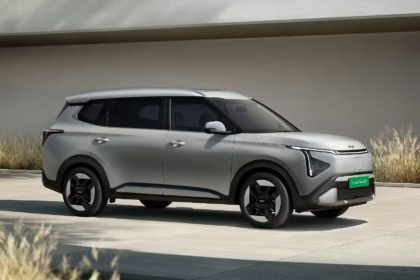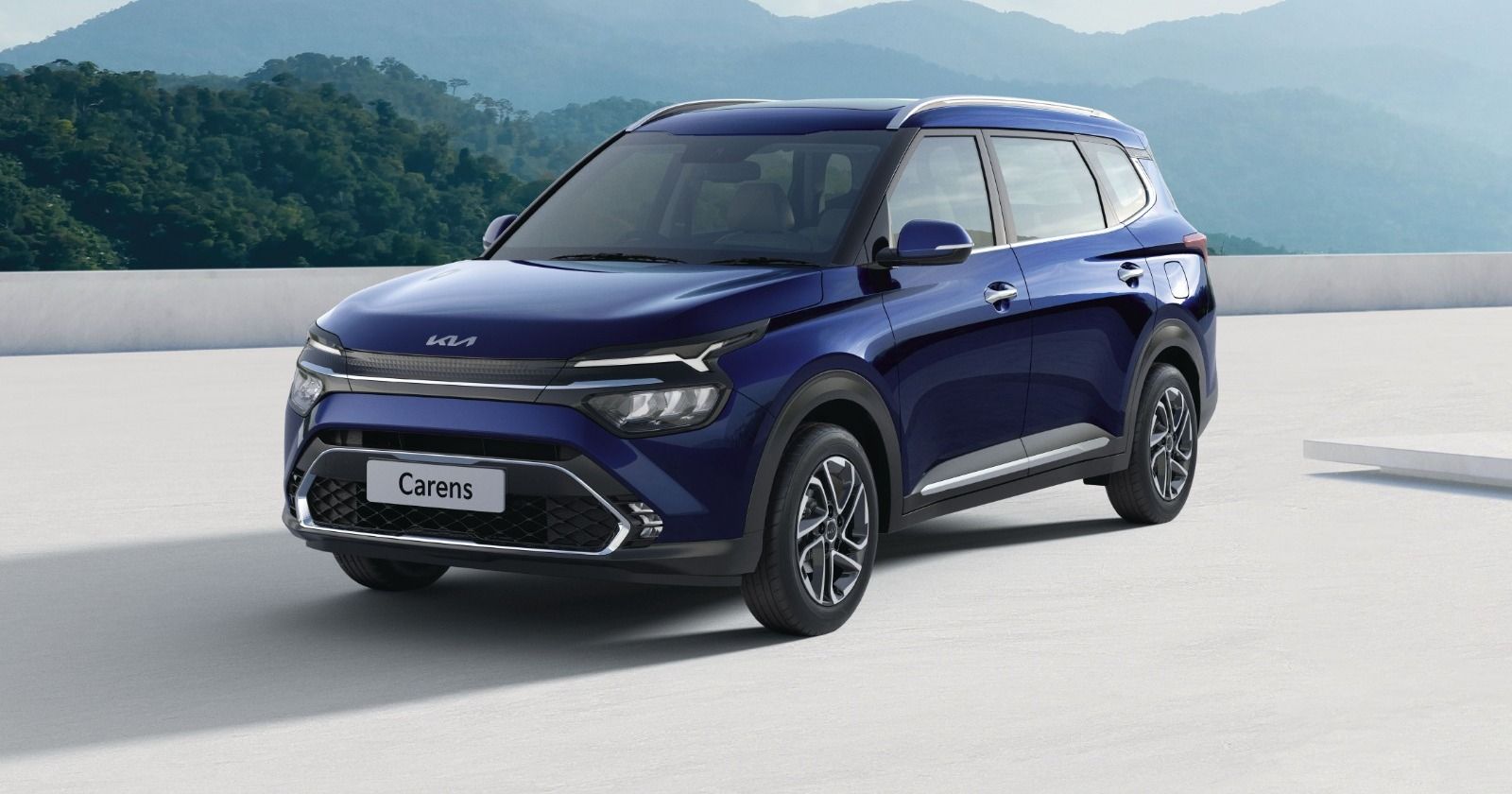
Introduction – Why Compare These Two
The EV market in India is evolving rapidly. With more and more families asking for affordable and reliable EVs, the demand for vehicles that effectively balance practicality, range, and affordability has gone up. Two such contenders that are very relevant in this context are the Kia Carens EV and the Citroën eC3 Aircross.
Though differently positioned, both have been conceptualized keeping the family buyer in mind, offering space for multiple passengers, the promise of electric efficiency, and pricing that challenges traditional petrol SUVs. Comparing them directly allows potential buyers to see which fits their lifestyle better: a bigger-family car suitable for long drives or a compact, city-friendly EV for everyday commuting and weekend outings.
Key reasons for this comparison:
Growing demand for affordable EVs in India.
- In fact, with the expansion of charging infrastructure and shrinking running costs for EVs compared to fossil‑fuel cars, more Indian families are seriously considering electric vehicles as viable daily drivers.
- Many buyers are looking for EVs that can offer more than just “city runabouts”-vehicles that can accommodate entire families for weekend getaways or intercity travel.
- Both Carens EV and eC3 Aircross position themselves as family‑friendly EVs aspiring to fill this emerging niche.
Focus of comparison – what really matters for family EV buyers:
- Space: Seating capacity and flexibility, e.g., 5‑seater vs 3‑row 7‑seater, legroom, headroom, and how practical the boot/trunk is for luggage, especially for family trips.
- Range & battery performance: Claimed battery capacity and range, but more importantly, real‑world usability — how far this car can go with a full load inside it, namely family and luggage, how often it needs to be charged, and whether it’s suitable for city or long‑distance drives.
- Price/Value for money: Purchase price initially, then cost of ownership at large (charging, maintenance), and whether the features justify the cost against the options available (EV or ICE).
Helping readers decide based on their needs:
- Big families: Those who need space for 5–7 people plus luggage, suitable for intercity journeys or frequent family trips.
- City driving & daily commute: This appealed to buyers focused on urban use, shorter trips, easy parking, and efficient daily driving.
- Occasional highway/weekend travel: Individuals who would possibly want a versatile car, capable of daily commutes but also able to handle the occasional long drives.
- Budget-conscious buyers: Those who consider mainly the affordability of EVs, savings from running costs, and overall value rather than premium features.
Key Specifications Overview
This section provides a sneak peek at the Kia Carens EV and Citroën eC3 Aircross EV by pointing out their key specifications for an easy understanding of which model might fit each specific reader’s needs.
The Carens EV is a 7-seat electric MPV targeted for families and long journeys. This makes it quite ideal for buyers who need a car capable of daily city drives as well as weekend getaways or intercity travel with a full family.
Key Specifications:
- Battery: ~51.4 kWh [Extended-Range variant]
- Claimed Range: ~490 km — suited for longer trips and highway driving
- Seating: 7-seater, 3-row seating; ample space for passengers and luggage.
- Positioning: A family-oriented EV that provides comfort on long-distance journeys and is practical in cities.
The Citroen eC3 Aircross EV is a compact, affordable electric vehicle targeted for city motoring and small families. It’s ideal for urban day-to-day drives, easy city parking, and for buyers on a budget looking for an affordable EV solution. The larger “Aircross” variant may boast 3-row seating, but its main focus remains urban usability.
Key Specifications:
- Battery: ~29–50 kWh, depending on variant — smaller battery for compact, budget-oriented use
- Claimed Range: ~320–380 km — enough for city and short intercity trips. Seating: Standard 5-seater – 2-row, 3-row in larger variant if available. Positioning: Affordable, city-oriented EV; ideal for daily commute, small families, and first-time EV buyers.
Space & Practical Utility
When it comes to family EVs, space and practicality are often the top deciding factors. The Kia Carens EV and Citroën eC3 Aircross EV cater to different needs: one prioritizes full-family comfort and long-trip usability, while the other focuses on compactness and city-friendliness. Understanding the seating, boot space, and overall practicality helps buyers choose the EV that suits their lifestyles.
Kia Carens EV — 7-seater for full families:
- Seating: 7 seats across 3 rows for comfortably seating adults and children on long drives.
- Legroom & headroom: Ample space in the front and rear rows; ideal for long journeys.
- Boot Space: Large cargo area which can handle luggage for the whole family, even when all seats are occupied.
- Flexible configuration: The rear seats can be folded to increase the cargo capacity, which will be useful for travel with varied requirements.
- Use case: Best suited for large families or groups who take long-distance journeys quite regularly, or who need more space and comfort during weekend trips.
Citroën eC3 Aircross EV — compact and city-friendly:
- Seating capacity: Standard 5-seater, 2 rows, thus being perfect for small families or couples with less frequent passengers.
- Legroom & headroom: Adequate for daily commutes and short trips, though not as generous as the Carens EV.
- Boot Space: Average luggage space, enough to run city errands or short distances, but limited for full family luggage.
- Urban convenience: Compact dimensions make parking, maneuvering, and city driving easier.
- Use Case: Ideal for first-time EV buyers, small families, or buyers focused on daily urban commutes.
Trade-offs & considerations:
- If the eC3 Aircross EV follows a 3-row layout, then general comfort for passengers and space for cargo may be at a loss with smaller vehicle dimensions.
- The Carens EV offers superior space and comfort but comes with a larger footprint, which may be less convenient in tight city streets.
- For buyers, the decision between space efficiency and compact usability has to balance family size, trip frequency, and the type of driving, city or highway.
Range, Battery & Real-World Usability
Range and battery performance remain key concerns for any EV buyer, especially for families planning longer trips. While both the Kia Carens EV and Citroën eC3 Aircross EV are designed to be practical, their underlying battery capacity and real-world usability are significantly different. Understanding these differences helps buyers make educated choices about which EV best suits their driving patterns and lifestyle.
Kia Carens EV – Long-range capability:
- Larger battery: ~51.4 kWh, for extended range and longer trips.
- Claimed range: ~490 km per full charge, making it suitable for inter-city and highway driving.
- Highway usability: Capable of comfortably handling full-family trips with luggage over long distances without frequent charging stops.
- Load impact: Range remains reasonable even with all seven seats occupied and cargo loaded.
- Practical benefit: Perfect for those buyers who need an EV both for daily commutes and for longer journeys with family.
Citroën eC3 Aircross EV – city-focused range:
- Smaller battery: ~29–50 kWh depending on variant; prioritises compactness and affordability over long-distance capability.
- Claimed range: ~320–380 km per charge, enough to cover all daily urban commutes and occasional weekend trips.
- Shorter trips: Best suited for city driving, errands, and moderate intercity travel.
- Load impact: Range can be reduced significantly with extra passengers or cargo on board, especially if you have the smaller battery variant.
- Practical advantage: It is perfect for buyers focused on city efficiency and daily use, rather than long-range highway trips.
Charging convenience & real-world considerations:
- Conducive to home charging: Both can be charged at home overnight, which should be perfect for daily commuters.
- Public charging: Usability, especially on longer trips, can be improved by the availability of fast chargers or public infrastructure.
- Driving patterns: City traffic, frequent stops, and AC usage can bring down real-world range far below the claimed figures.
- Full-load effects: Heavy passenger or luggage load reduces efficiency. The Carens EV manages the situation better because of its larger battery, while the eC3 Aircross might need more frequent recharging.
Price & Value Proposition
Price and value for money often make or break the decision in the Indian EV market, especially when pitting a high-space EV like Kia Carens EV against a budget-oriented EV like the Citroën eC3 Aircross EV or its more compact sibling. Carens EV comes with a higher price tag but offers much more space, comfort, and range capability, features that can make it a better long-term investment for families or those contemplating frequent inter-city drives. However, the eC3 Aircross EV trades off that premium comfort and range to return a more affordable, city-friendly electric mobility option that easily makes for a practical entry point into EV ownership for cost-conscious buyers or small families.
Kia Carens EV — Higher price, higher value:
- Estimated ex-showroom price in India: ~ ₹ 18–22 lakh — premium compared to entry-level EVs.
- With this price, you get 7‑seater capacity, more interior and boot space, and utility for full families and long trips.
- Larger battery and higher claimed range add to its value, making it better suited to highway driving, inter‑city travel, and full‑load comfort.
- For buyers prioritizing comfort, flexibility, space, and long‑term usability, this EV offers a “buy once, own many years” kind of value proposition.
Citroën eC3 Aircross EV – Affordable, practical for city/small-family use:
- Estimated ex‑showroom price: ~ ₹12–15 lakh — much lower, for the reach of either first-time EV customers or people on a budget.
- Sufficient for small families/couples/daily commuting needs without having to commit heavily financially.
- Lower cost of running and simpler usability are good for city driving, errands, and short trips, reducing barriers to entry for EV adoption.
- Offers core EV benefits – electric drive, low running cost – at minimal price premium over basic ICE or small EV cars.
Value trade‑offs to consider:
- Carens EV requires a higher upfront cost, but it pays off in terms of range, comfort, and flexibility; it seems to be better for larger families and mixed usage.
- Because the eC3 Aircross EV has sacrificed a bit of comfort, space, and long-distance capability, it offers an extremely affordable EV ownership experience.
- This is good enough for city dwellers, small families, or budget-conscious buyers.
- The choice ultimately depends on the buyer’s priorities: whether they value space + range + flexibility, or affordability + simplicity + city practicality.
Target Buyer Personas
Various EVs will attract different types of buyers based on lifestyle, family size, and driving habits. Knowing who each vehicle is suited to helps make an informed choice among buyers. The Kia Carens EV and the Citroën eC3 Aircross EV are aimed at different segments: one prioritizes space and long-range usability, while the other focuses on affordability and urban practicality.
Kia Carens EV – For big families and inter-state travel:
- Large families: 7-seater configuration accommodates adults and children comfortably, thus suitable for households of 5–7 members.
- Frequent long drives: High-range battery (~490 km) supports inter-city and highway trips with minimal stops.
- Those seeking comfort and space: ample legroom, headroom, and boot space for luggage enhance travel comfort for families.
- It can be used both for traveling within the city and on long drives, so it allows flexibility in various travel needs.
- Long-term utility valued by buyers: those who seek one EV solution for multiple use cases, ranging from day-to-day commuting, weekend trips, and the occasional family holiday.
Citroën eC3 Aircross EV- Ideal for city-focused, budget-conscious buyers:
- Budget-conscious individuals/families: The relatively lower up-front cost, starting at approximately ₹12–15 lakh, places it within reach for most first-time EV buyers.
- City driving: Compact size and efficient battery usage make it ideal for urban commuting, errands, and short trips.
- Small to midsized families: Comfortable for 2–4 passengers; can take extra passengers on occasion.
- First-time EV users find it easier to adapt because the simple usability and manageable size make them more approachable, and their running costs remain low.
- Practicality over luxury: it gives priority to affordability and ease of parking, convenient for day-to-day urban mobility.
What to Watch Out For
When comparing EVs like the Citroën eC3 Aircross EV and Kia Carens EV, it’s not just about comparing their claimed specs; the real world brings its own set of challenges. Here’s what to watch out for:
Citroën eC3 Aircross EV – Possible pitfalls and caveats.
- Real-world 3-row comfort might be compromised: if eC3 Aircross tries to offer 3-row seating to match the “family EV” use case, the compact dimensions may result in cramped space, with the third row being particularly tight for grown-ups or taller children.
- Boot space and luggage‑capacity limitations: with a compact build and smaller battery/structure, the luggage space, especially when full seating is occupied, may be restricted, which is not ideal for full‑family trips or heavy loads.
- Range and efficiency drop under full load: The smaller battery/compact build, with multiple passengers and their luggage aboard, would likely equate to a substantially reduced range compared to the claimed figure, long trips becoming rather inconvenient or involving more frequent charging.
- Charging infrastructure & access: Dependency on public charger availability or home charging accessibility; in many areas, public fast chargers are still limited, which could make longer journeys tricky or impractical.
- After-sales support and service network uncertainty: With the maturing of the EV market, many service centres and technicians are still catching up; the availability of spare parts, qualified EV-specialist service staff, and timely maintenance may not be as robust as in ICE vehicles – this can be a concern for long-term ownership.
Kia Carens EV: Here’s all that you should realistically know
- Real‑world range may vary: While this has a bigger battery and a high claimed range, actual range will depend greatly on what kind of use the vehicle sees — heavy load, full seating, air‑conditioning use, driving speed, and stop‑and‑go traffic reduce efficiency.
- Charging Infrastructure & Convenience: For long drives or inter‑city trips, the availability of reliable public/fast chargers is important; if the charging network along intended routes is sparse, the advantage of higher range may not fully translate.
- EV service network coverage: Like most other EVs in India, service centre coverage, trained technicians, availability of spare parts, especially batteries and electronics, are limited in smaller towns or in specific regions; buyers must ensure adequate after-sales support in their vicinity before placing an order.
- Battery longevity and health concerns: In due time, the degradation of batteries, which happens with all EVs, will undermine this car’s range and performance. Long-term considerations for owners will include maintenance and possible reduction in usable range over time.
- Higher upfront cost vs maintenance savings — balance needs to be considered: Carens EV certainly provides comfort, space, and range. Still, its higher price versus others must be weighed against the fact that the long-term benefits-costs (savings at charging stations, reduced number of mechanical issues) will actually offset the premium over time.
Conclusion
The ultimate pick between Kia Carens EV and Citroën eC3 Aircross EV will be a function of your family size, driving pattern, and priorities; there’s no single-size-fits-all answer.
Big family + long trips → Carens EV:
- It offers 7-seater space, a generous boot, and a long-range battery suitable for intercity and highway travel.
- Ideal for families needing comfort, versatility, and reliability on long drives.
Budget + urban commuting → eC3 Aircross EV:
- Compact, affordable, great for city driving, running daily errands, and small families.
- With lower purchase price and running costs, it is an attractive choice for first-time EV owners or buyers on a budget.
FAQs
Q1. Who should consider the Carens EV over the eC3 Aircross EV?
- If you have a big family of 7 people, and you require a 3‑row, 7‑seater EV for daily use, family commutes, and sometimes even longer drives.
- If you plan inter‑city or highway travel, want long range and comfort, and expect to carry luggage or a full load.
- If you prioritize space, flexibility, and comfort over minimum cost, for instance, for weekend escapes, family vacations, or longer trips.
Q2. For whom is the eC3 Aircross EV best suited?
- Small to mid‑sized families or couples, primarily driving in cities or suburbs.
- First-time EV buyers or budget-conscious buyers looking for more affordable electric mobility.
- For those customers wanting a compact, city-friendly EV for daily commutes, errands, and the occasional short trips, where parking space, affordability, and ease of driving matter more than large space or long range.
Q3. Will Carens EV’s battery & range really be enough for long drives in India?
- Yes — with the bigger battery pack of around 51.4 kWh, Carens EV offers a claimed range high enough for inter‑city or long‑distance drives.
- Real-world use, however, with a full load of passengers and luggage, usage of air-conditioning/accessories, and city-to-highway mix, could see actual range being lower than what’s claimed. It’s always wise to plan your charging stops or overnight stays accordingly.
Q4. Can the eC3 Aircross EV handle long-distance trips if you choose it for that?
- It’s possible, but with limitations. Because it’s more compact and the battery capacity is modest, it may require frequent charging stops. It is better suited for city driving or short to moderate trips.
- For long-distance travel with family and luggage, comfort, boot space, and battery constraints make the journey less enjoyable or call for careful planning.
Q5. How about running costs and ease of ownership – charging, maintenance?
- Both electric vehicles will be relatively economical to run and maintain compared to internal combustion engine cars. For both, home-charging overnight should suffice for daily city commutes and short trips.
- Long-distance usage: Carens EV’s larger battery gives more flexibility, but you’ll need to check whether reliable public fast-charging infrastructure is available along your routes.
If you live in a city with good EV infrastructure, the eC3 Aircross EV can be cost-efficient and convenient.
Q6. What are the trade‑offs or compromises when buying each?
- Carens EV: Higher upfront cost, larger footprint, harder to maneuver/park in tight city spaces. The actual range will drop under heavy load; a reliable charging network is a must for long trips.
- eC3 Aircross EV: Smaller size and lower cost make it city‑friendly, but seating/space, boot/cargo capacity, and long‑distance comfort are compromised. With a full load or on long trips, the performance might feel a bit constrained.
Q7. How to decide between the two — what should buyers check before the final decision?
- Assess your family size and typical passenger count.
- Check driving patterns – mostly city vs frequent long drives.
- Estimate how often you’ll need to carry luggage or a heavy load.
Assess charging infrastructure availability in your city / along your frequent travel routes. Compare budget versus features versus long-term utility, possibly calculating total cost of ownership over years rather than just the upfront price.